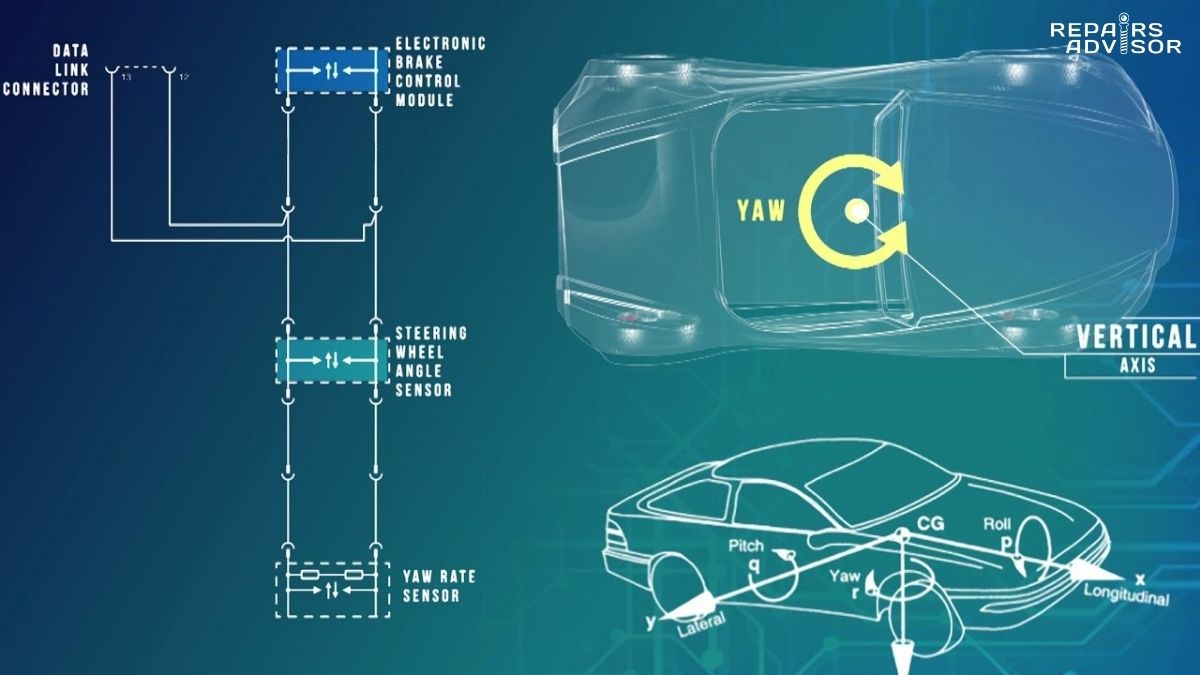
Most drivers have never heard of the yaw rate sensor, yet this compact electronic component quietly stands between controlled cornering and a dangerous spin-out every time conditions get challenging. Mounted near the centre of gravity in your vehicle, the yaw rate sensor continuously measures how quickly the car is rotating around its vertical axis — feeding that data to the Electronic Stability Control system so it can intervene before a slide becomes an accident. Understanding how the yaw rate sensor works, what happens when it fails, and why its replacement requires professional calibration can save both confusion at the dashboard and unnecessary repair costs.
Quick Answer
A yaw rate sensor measures how quickly a vehicle rotates around its vertical (Z) axis, reported in degrees or radians per second. It provides real-time data to the Electronic Stability Control (ESC) system, which compares the actual yaw rate against the intended path calculated from steering angle and wheel speed inputs. When the two diverge — indicating oversteer or understeer — ESC modulates individual wheel brakes and reduces engine torque to bring the vehicle back on track. Failure symptoms include illuminated ESC, traction control, or ABS warning lights; zero-point calibration with a scan tool is mandatory after any replacement.
What Is a Yaw Rate Sensor?
Yaw describes the rotational movement of a vehicle around its vertical axis — the same axis a spinning top rotates on. When a car corners, changes lanes, or begins to slide, it exhibits yaw. A yaw rate sensor (also called a rotational speed sensor) measures exactly how fast that rotation is occurring, expressed in degrees per second or radians per second.
The sensor’s job is to serve as the vehicle’s internal reference for what the car is actually doing versus what the driver intends it to do. Steering angle data alone tells the Electronic Stability Control system what path the driver wants. Yaw rate data tells the system what path the vehicle is actually taking. The gap between those two values is where ESC earns its keep.
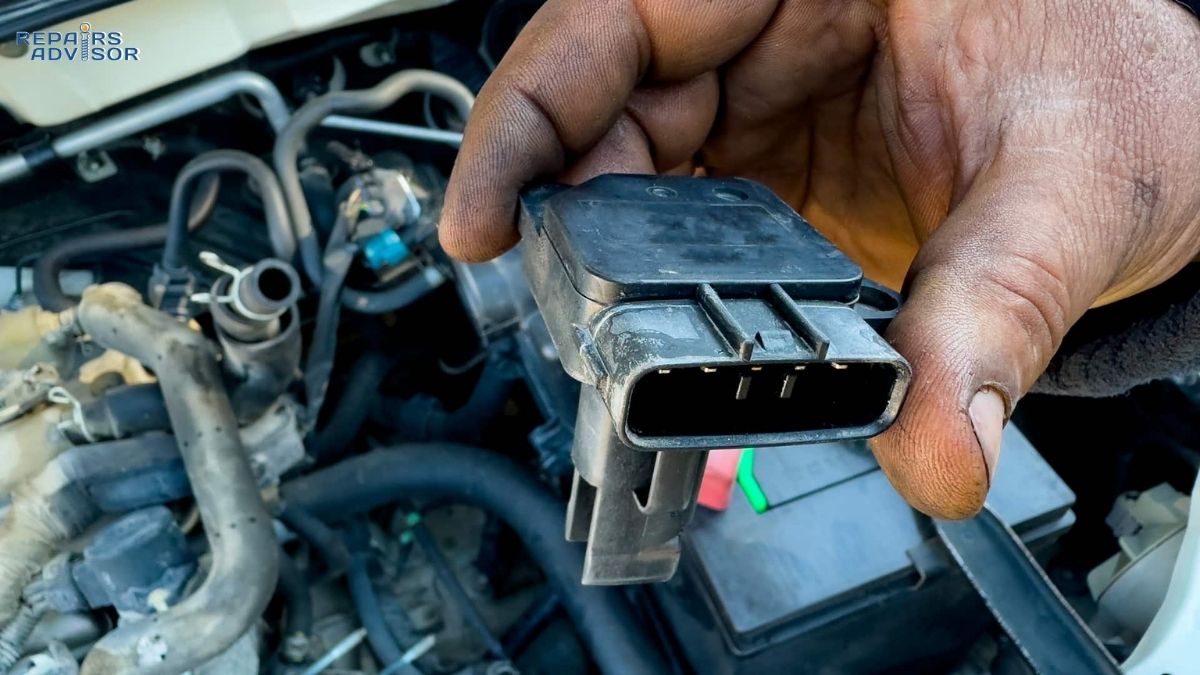
You’ll typically find the yaw rate sensor mounted close to the vehicle’s centre of gravity — under the centre console, beneath a front seat floor panel, or integrated into a combined module alongside a lateral accelerometer. The central mounting position matters: it allows the sensor to capture true rotational movement without interference from suspension travel at the corners. On many modern vehicles, the yaw rate sensor is part of a larger Inertial Measurement Unit (IMU) that also measures lateral and longitudinal acceleration in one compact package.
Beyond ESC, the sensor feeds data to the anti-lock braking system, traction control, rollover detection systems, and increasingly, to the Advanced Driver Assistance Systems that support lane keeping and automated emergency braking. It is a foundational input for nearly every active safety function on a modern vehicle.
How the Yaw Rate Sensor Works: MEMS Technology and the ESC Loop
The MEMS Gyroscope Principle
Modern yaw rate sensors rely on Micro-Electromechanical Systems (MEMS) technology — a fabrication method that etches microscopic mechanical structures directly onto silicon chips. Inside the sensor, tiny vibrating elements (commonly tuning fork structures, comb drives, or resonating masses) are driven into oscillation along a known axis.
When the vehicle rotates, the Coriolis effect comes into play. The Coriolis force acts perpendicular to any moving mass that is simultaneously experiencing rotation — so as the vibrating element oscillates along one axis and the car begins to yaw, the element experiences a force along a third axis perpendicular to both. The magnitude of this deflection is directly proportional to the rate of rotation. Electrodes surrounding the vibrating mass detect the deflection as a change in capacitance, which a signal conditioning circuit converts into a clean electrical output.
This output travels over the vehicle’s CAN bus to the stability control module, typically updating at rates of 100Hz or faster — giving the ESC system a continuous stream of rotational data with minimal latency. Temperature compensation circuits within the sensor correct for drift caused by thermal changes, which is important given the wide temperature range a vehicle experiences across seasons and climates.
From Sensor Signal to Stability Intervention
The ESC control module runs a continuous comparison. On one side, it receives the actual yaw rate from the sensor. On the other, it calculates a target yaw rate by combining inputs from the steering angle sensor, wheel speed sensor inputs, vehicle speed, and the lateral accelerometer.
Under normal driving, actual and target yaw rates track closely. In a controlled motorway lane change or a smooth sweeping corner, any deviation is minor and the system does nothing. But in an emergency swerve, on black ice, or when a sudden gust pushes the vehicle sideways, the actual yaw rate diverges sharply from the target. The module identifies whether the vehicle is understeering (not turning enough — actual yaw rate lower than target) or oversteering (rotating too aggressively — actual yaw rate higher than target).
Correction happens within milliseconds. For oversteer, the anti-lock braking system works alongside ESC to apply braking force to the outer front wheel, countering the rotation. For understeer, braking is applied to the inner rear wheel to help tighten the turn. Engine torque is simultaneously reduced to lower the forces acting on the tyres. The entire intervention cycle from sensor input to brake actuation typically completes in under 15 milliseconds — far faster than any human reflex.
For professional technicians: on vehicles with integrated brake-by-wire architectures, the yaw rate signal feeds directly into electrohydraulic actuator logic. Knowing how ESC and brake-by-wire systems interact is essential when diagnosing stability faults on newer platforms where hydraulic and electronic control overlap in ways that can produce misleading symptoms.
Yaw Rate Sensor Integration: Safety Systems and ADAS
The Core Safety Network
The yaw rate sensor doesn’t operate in isolation. It is one node in a tightly integrated safety network. The traction control system uses yaw data to distinguish between normal wheelspin during acceleration and the early stages of a directional instability event. ABS uses it to verify that wheel lock-up detection correlates with actual vehicle dynamics rather than sensor anomalies. Rollover detection systems monitor yaw rate in combination with lateral G-force to identify when a vehicle is at risk of tipping.
The quality of each of those safety systems depends directly on the accuracy of the yaw rate sensor. A sensor that drifts, produces noise, or outputs implausible values degrades all of them simultaneously — which is why a single faulty yaw sensor can trigger warning lights across multiple systems at once.
How ADAS Features Depend on Yaw Rate Accuracy
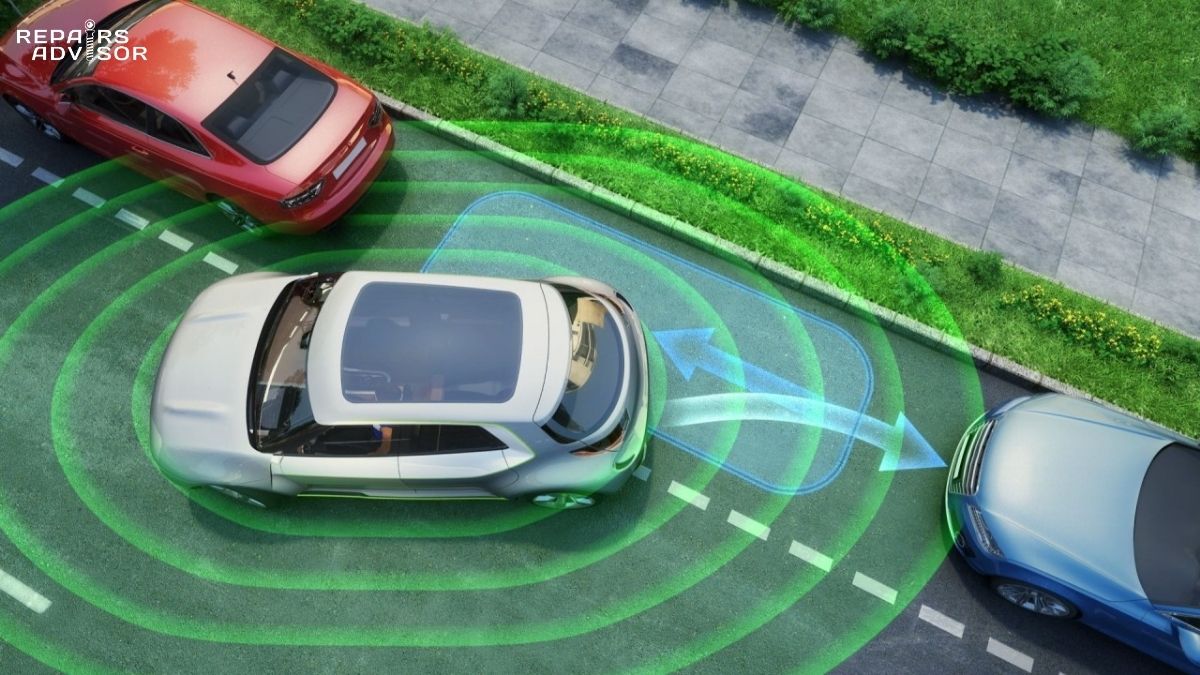
Advanced driver assistance features place additional demands on yaw rate accuracy. Lane departure warning systems use yaw data to distinguish intentional lane changes from unintended drifting. Adaptive cruise control systems use it to maintain accurate vehicle path tracking on curved roads. Automatic emergency braking systems reference yaw rate when calculating intervention thresholds — knowing whether the vehicle is already in a controlled turn changes whether an emergency brake application is appropriate.
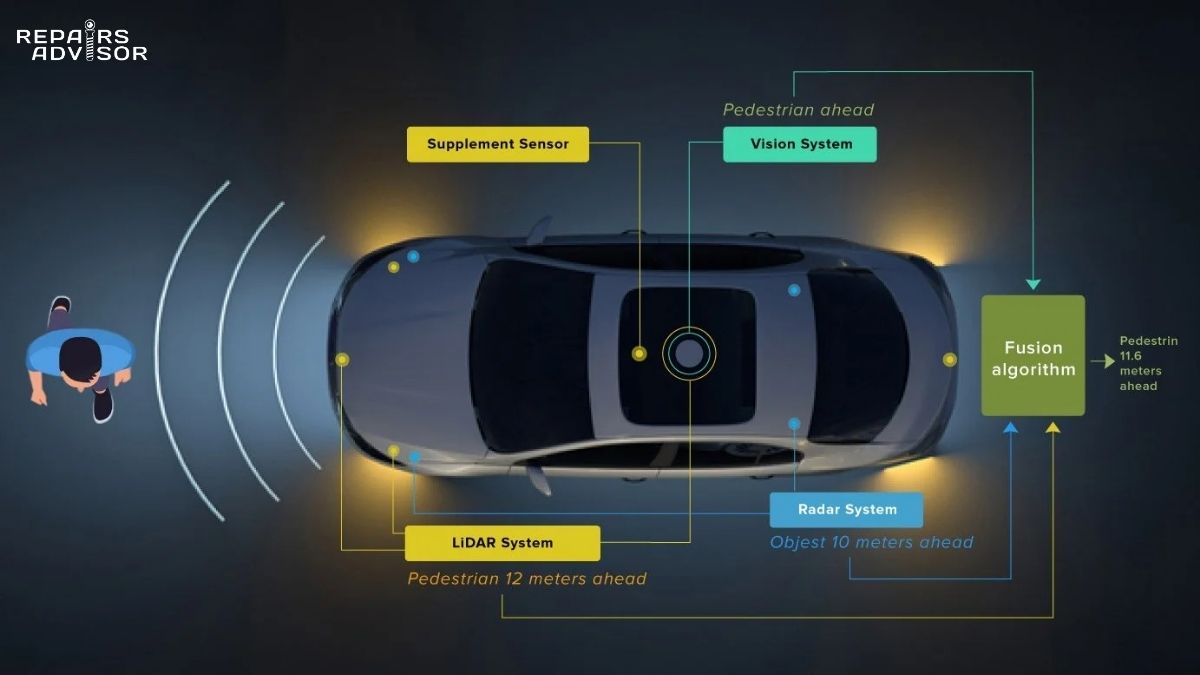
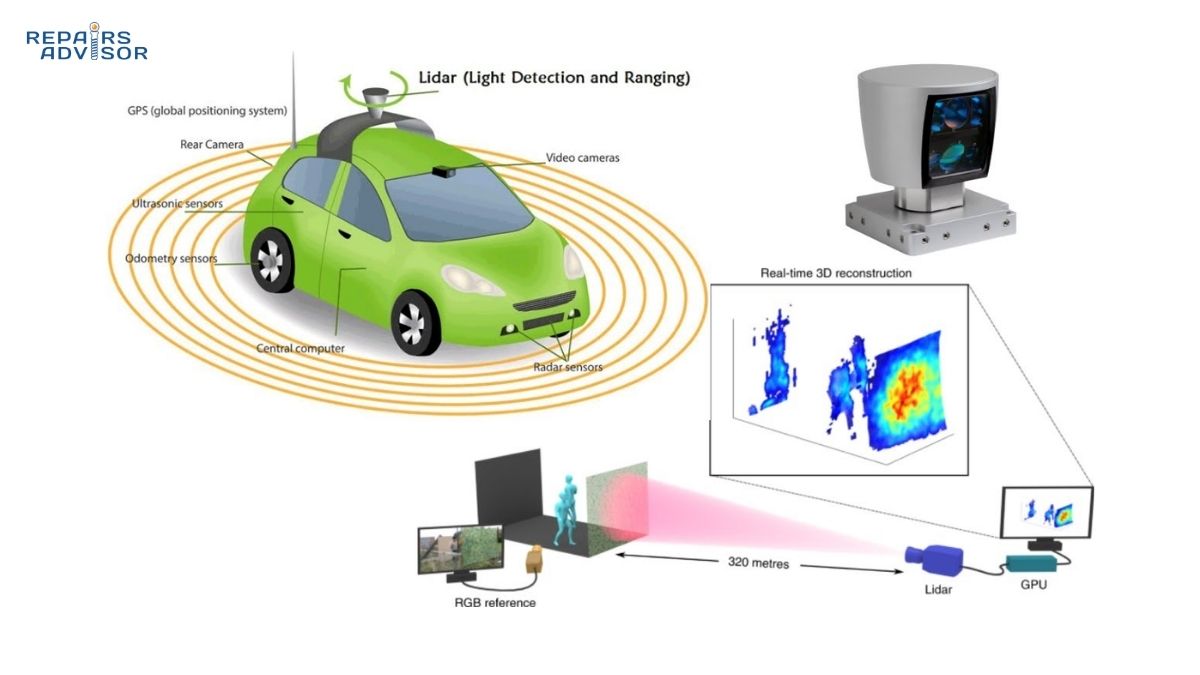
In vehicles with full sensor fusion in ADAS, the yaw rate sensor output is fused with radar, camera, and accelerometer data to construct a complete dynamic model of vehicle state. An inaccurate yaw reading doesn’t just affect one feature — it contaminates the entire fused picture, potentially causing multiple ADAS functions to behave incorrectly or disable themselves as a safety precaution.
Symptoms of a Bad Yaw Rate Sensor
Because the yaw rate sensor is critical to so many systems, its failure tends to be visible rather than silent. The following warning signs warrant prompt diagnosis.
ESC or Vehicle Stability Warning Light — The most common first indicator. When the stability control module detects an implausible or absent yaw rate signal, it logs a fault code and disables ESC intervention. The warning light comes on immediately. On many platforms this appears as “ESC OFF”, “Stability Control”, “VSC” (Toyota), “StabiliTrak” (GM), “AdvanceTrac” (Ford), or “DSC” (BMW/Mazda) depending on manufacturer branding.
Traction Control or ABS Warning Lights — Because traction control and ABS both consume yaw rate data, a sensor fault frequently triggers additional warning lights beyond the ESC indicator. Seeing multiple stability-related lights illuminate simultaneously is a strong sign the fault is upstream — at the shared sensor — rather than in each individual system.
Unexpected Stability Interventions — A sensor producing erratic or noisy output rather than a flat failure can cause ESC to apply brakes at the wrong moment. Drivers may feel unexpected braking in corners, or notice the stability system activating on smooth dry roads where no intervention should be needed. This is often the most alarming symptom because it affects the driving experience directly.
Increased Body Lean or Reduced Cornering Confidence — With ESC disabled, the corrective safety net is gone. On slippery surfaces or in emergency manoeuvres, the vehicle will no longer self-correct for oversteer or understeer. Experienced drivers may notice handling feels less composed than usual, particularly near the limit of adhesion.
Stored Chassis Fault Codes Without Obvious Lights — Some vehicles suppress warning lights in certain fault conditions while still storing codes. Using an OBD-II scan tool capable of reading chassis (C-code) data can reveal yaw sensor faults before they manifest as visible dashboard warnings.
⚠️ Safety Note: A faulty yaw rate sensor disables your vehicle’s Electronic Stability Control system. ESC significantly reduces the risk of loss-of-control accidents, particularly on wet roads, gravel, or during sudden avoidance manoeuvres. With it disabled, avoid highway speeds and adverse weather conditions until the fault is diagnosed and resolved. Do not dismiss active stability control warning lights as a routine maintenance item.
Diagnosing a Yaw Rate Sensor Fault
Reading Chassis Fault Codes
Effective diagnosis starts with an OBD-II scan tool capable of reading chassis codes — not all entry-level readers cover the C-code range. Connect to the vehicle’s diagnostic port and check for active and stored faults. Common yaw-sensor related codes include:
C0196 — Yaw Rate Sensor Circuit Malfunction (common on GM platforms; often linked to multi-axis sensor failure under the centre console)
C0063 — Yaw Rate Sensor Subfault
C1280 — Yaw Rate Sensor Signal Fault (frequently caused by liquid intrusion under the console on Ford Escape and Explorer)
C1210 — Zero Point Calibration of Yaw Rate Sensor Undone (indicates calibration was not performed after a replacement or battery disconnect)
C1282 / C1283 — Manufacturer-specific yaw sensor codes
Fault codes alone are not definitive. The same warning lights can be triggered by a failing wheel speed sensor, a weak battery voltage condition, or a fault in the steering angle sensor. A structured approach to elimination is more reliable than immediate part replacement.
Checking Before Replacing — Common Misdiagnoses
Before ordering a replacement sensor, work through these checks. First, verify battery voltage — low voltage is a surprisingly common trigger for spurious stability system faults, particularly after a parasitic drain event or on an ageing battery. Second, inspect the sensor connector and wiring harness for corrosion, moisture, or damaged pins. Liquid intrusion under the centre console (spilled drinks, sunroof drains) is a documented cause of yaw sensor failure on several platforms.
Third, check the wheel speed sensors — a faulty wheel speed sensor generates stability control and ABS warning lights that closely mimic yaw sensor failure. Reading live data from all four wheel speed sensors while driving slowly will quickly reveal any that are missing or erratic.
With a capable scan tool displaying live data, watch the yaw rate output as you gently rock the vehicle or turn the steering through its range with the vehicle stationary. A healthy sensor produces a smooth, proportional signal. Zero output with the vehicle moving, a stuck fixed value, or wildly erratic readings all point toward the sensor or its wiring circuit rather than the control module.
Yaw Rate Sensor Replacement and Zero-Point Calibration
Why Calibration Is Non-Negotiable
Replacing the physical sensor is only half of the repair. Every yaw rate sensor requires zero-point calibration after installation — a process that establishes the sensor’s baseline reference for a stationary vehicle. Without it, the ESC module has no valid reference point and will store calibration fault codes (C1210 and related), keeping stability control disabled.
Zero-point calibration procedure requires the vehicle to be stationary on a level surface with an inclination of less than 1 degree — even a slight slope will skew the baseline. The ignition is placed in the specified position, the sensor is allowed to stabilise for several seconds, and the scan tool or jumper wire procedure (on platforms that support it) triggers the calibration routine. The process takes two to five seconds once conditions are met, but must be performed correctly or the calibration will need to be cleared and repeated.
The calibration requirement extends beyond sensor replacement. Front wheel alignment adjustments, suspension component replacements, and in some cases even battery disconnection can require a fresh zero-point calibration on certain platforms. Toyota, for example, explicitly lists front wheel alignment adjustment as a trigger for yaw rate sensor zero-point calibration in their service documentation.
Professional Service Recommendation
Professional service is strongly recommended for yaw rate sensor replacement in most cases. Several factors make this a job that extends beyond standard DIY territory. Some vehicles — particularly certain Ford platforms — integrate the yaw rate sensor into the Restraints Control Module or airbag system, making the replacement procedure significantly more complex and potentially involving SRS system risks.
On vehicles requiring OEM-level scan tools for calibration (Toyota Techstream, GM Tech2, BMW ISTA), the calibration simply cannot be completed without dealer-level equipment. Fitting a replacement sensor without completing calibration leaves the vehicle in a fault state with ESC disabled — no better than before the repair.
Replacement yaw sensors typically cost $80–$350 depending on whether OEM or aftermarket parts are used and the complexity of the platform. Professional labour and calibration adds $150–$400, bringing total repair estimates to the $250–$575 range for most vehicles. Procedures vary significantly across platforms and model years — sensor location, connector type, torque specifications, and the calibration method all differ, so consulting the service documentation for your specific vehicle before starting work is essential.
What the Yaw Rate Sensor Means for Your Safety
The yaw rate sensor is a small component with an outsized safety responsibility. Through its MEMS gyroscope, it provides the real-time rotational data that underpins ESC, ABS, traction control, rollover detection, and a growing list of ADAS features. Every millisecond, it is comparing what the vehicle is doing against what the driver intends — and silently enabling the corrections that prevent ordinary situations from becoming accidents.
When warning lights involving stability control appear, the right response is prompt diagnosis rather than waiting for the next service interval. Use a chassis-capable scan tool to read C-codes before assuming which component is at fault. Address wiring, battery, and wheel speed sensor possibilities before replacing the yaw sensor itself. And when replacement is needed, treat zero-point calibration as an inseparable part of the job — not an optional final step.
For model-specific sensor locations, wiring diagrams, calibration sequences, and the exact diagnostic steps that factory technicians follow, a vehicle-specific repair manual is the definitive reference — because on yaw rate sensor work, the details that vary by platform are exactly the ones that determine whether the repair is complete or leaves the stability system still disabled.
Yaw Rate Sensor: Frequently Asked Questions
The yaw rate sensor is one of the most important — and least understood — components in a modern vehicle’s safety system. These questions cover what it does, how to recognise when it’s failing, and what to expect when it needs replacing.
Quick Answer
A yaw rate sensor measures how quickly your vehicle rotates around its vertical axis, feeding that data to the Electronic Stability Control system to detect and correct oversteer or understeer. When it fails, ESC is disabled and warning lights appear. Replacement costs $250–$575 and always requires zero-point calibration — professional service is strongly recommended.
What does a yaw rate sensor do?
Yaw is the rotational movement of a vehicle around its vertical axis — the same motion that occurs when a car corners, changes lanes, or begins to slide. The yaw rate sensor quantifies exactly how fast that rotation is happening, in degrees or radians per second, and feeds that measurement continuously to the Electronic Stability Control (ESC) system. ESC compares the actual rotation rate against the intended path calculated from your steering input and vehicle speed.
When the two values match, ESC does nothing. When they diverge — because the car is understeering wide of a corner or oversteering into a spin — ESC applies targeted braking to individual wheels and reduces engine torque to bring the vehicle back on its intended line. The yaw rate sensor also supports the ABS system, traction control, rollover detection, and advanced driver assistance features including lane departure warning and automatic emergency braking.
Where is the yaw rate sensor located?
The yaw rate sensor is typically mounted near the vehicle’s centre of gravity to capture accurate rotational data without interference from suspension movement at the corners. Common locations include under the centre console, beneath the front seat floor panel, or integrated into a combined Inertial Measurement Unit (IMU) module alongside a lateral accelerometer.
On some platforms — notably certain Ford models — the yaw sensor is integrated into the Restraints Control Module. Sensor location varies considerably across manufacturers and model years, so consulting the service manual for your specific vehicle is the most reliable way to locate it before starting any diagnostic work.
What are the symptoms of a bad yaw rate sensor?
The most common warning signs of a failing yaw rate sensor are:
ESC or stability control warning light — The first and most frequent indicator. The stability control module detects an implausible or absent signal and disables ESC intervention, illuminating the warning light. This may appear as ESC OFF, VSC, StabiliTrak, AdvanceTrac, or DSC depending on the manufacturer.
Multiple warning lights simultaneously — Because the traction control system and ABS both consume yaw rate data, a single sensor fault can trigger several warning lights at once. This pattern — multiple stability-related lights together — often points to a shared upstream sensor rather than individual system failures.
Unexpected stability interventions — A sensor producing erratic output rather than failing completely can cause ESC to apply brakes incorrectly during normal cornering. Drivers notice unexpected braking sensation in turns or stability activation on dry, smooth roads.
Stored chassis fault codes — Even without visible dashboard lights, an OBD-II scan tool capable of reading C-codes may reveal yaw sensor faults. Common codes include C0196, C0063, C1280, C1282, and C1283, though the exact codes vary by manufacturer.
⚠️ Important: A failed yaw rate sensor disables Electronic Stability Control. This significantly increases the risk of losing vehicle control on wet roads or during emergency manoeuvres. Active stability control warning lights should be diagnosed promptly — avoid adverse weather and highway driving until the fault is resolved.
Can a bad yaw rate sensor be misdiagnosed?
Yes — yaw sensor faults are frequently confused with other issues that produce identical warning lights. The three most common misdiagnoses are:
Weak battery voltage — Low voltage is a surprisingly common trigger for spurious stability system faults. Always check battery condition and charging voltage before suspecting the sensor itself.
Faulty wheel speed sensor — A failing wheel speed sensor generates ESC, ABS, and traction control warning lights that are nearly identical to yaw sensor failure symptoms. Checking live data from all four wheel speed sensors while driving slowly is a quick way to rule this out.
Steering angle sensor fault — The steering angle sensor provides the “intended path” input that ESC compares against yaw rate data. A fault here can produce similar stability system warnings. It may also require its own recalibration after certain repairs.
A proper diagnosis uses a chassis-capable scan tool to read live sensor data — not just fault codes — and systematically eliminates these alternatives before replacing the yaw sensor.
Does a yaw rate sensor need calibration after replacement?
Yes, without exception. Zero-point calibration is mandatory after every yaw rate sensor replacement. The procedure establishes the sensor’s baseline reference for a stationary vehicle on a level surface. Without it, the ESC module has no valid reference point and stores calibration fault codes (typically C1210), leaving stability control disabled even with a new sensor fitted.
The calibration requires the vehicle to be parked on a surface with less than 1° of inclination while a scan tool (or in some cases a jumper wire) triggers the calibration sequence. The process itself takes only a few seconds, but the equipment requirement and the need for a perfectly level surface mean this is not a straightforward DIY step on most vehicles. Many platforms require OEM-level diagnostic tools — Toyota Techstream, GM Tech2, or equivalent — that are unavailable outside professional workshops.
The calibration requirement also applies after front wheel alignment adjustments and some suspension component replacements, not only after sensor replacement itself.
How much does yaw rate sensor replacement cost?
Replacement yaw sensors typically cost $80–$350 for the part, depending on whether OEM or aftermarket components are used and the complexity of the platform. Professional labour and calibration adds $150–$400, bringing total repair estimates to around $250–$575 for most vehicles.
Vehicles where the yaw sensor is integrated into a larger module (such as an airbag Restraints Control Module) may cost significantly more due to the complexity of the replacement procedure. Getting a quote that explicitly includes zero-point calibration is important — a repair that omits calibration leaves the stability system non-functional regardless of part quality.
Is it safe to drive with a faulty yaw rate sensor?
The vehicle will typically remain driveable, but with reduced safety capability. A failed yaw rate sensor disables Electronic Stability Control, which means the automatic correction that prevents oversteer and understeer spin-outs is no longer active. On dry roads in normal driving, most drivers will not notice a difference. In wet conditions, on loose surfaces, or during sudden emergency manoeuvres, the absence of ESC meaningfully increases the risk of losing control.
Driving at highway speeds, in rain or snow, or in situations that may require sudden avoidance manoeuvres should be avoided until the fault is diagnosed and resolved. For a full picture of how stability, braking, and control systems work together — and what’s affected when any one component fails — the yaw rate sensor guide covers the complete system in detail.