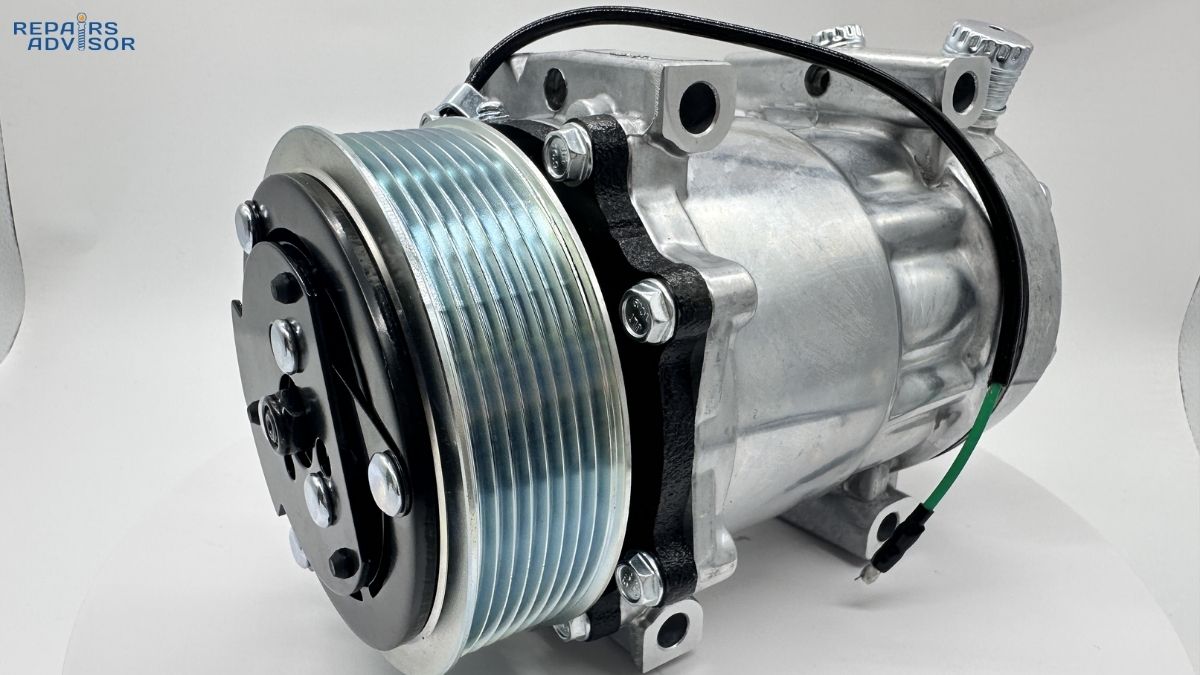
Every stage of the automotive air conditioning cycle depends on one component doing its job correctly first: the compressor. It’s the pump that pressurizes refrigerant gas and gets the whole system moving, and understanding how it’s built, how it engages, and why it fails goes a long way toward diagnosing an A/C problem correctly the first time.
Quick Answer
The A/C compressor is the component that pressurizes refrigerant gas to drive the entire refrigeration cycle, engaging through an electromagnetic clutch on belt-driven systems or running continuously on the electric compressors used in hybrids and EVs. Loud noise, poor cooling, or a clutch that won’t engage are the most common failure symptoms, and a full compressor replacement — including the system flush that’s often skipped — commonly runs $850–$2,400.
What Does the A/C Compressor Do?
The compressor is the power source for the entire refrigeration cycle — every stage downstream depends on the pressure and flow it creates. Without the compressor raising refrigerant pressure and temperature, the condenser has nothing to release, the expansion device has nothing to meter, and the evaporator has nothing cold to circulate. When an A/C system isn’t cooling, the compressor is often where diagnosis has to start, since a healthy compressor is the prerequisite for everything else in the cycle working correctly.
Compressor Design Types
Manufacturers use a handful of different internal designs to build the actual pumping mechanism, and the type installed affects how the system is controlled and diagnosed.
Piston Compressors — Fixed vs. Variable Displacement
Piston compressors come in two control styles. Fixed-displacement compressors cycle on and off via the clutch — the compressor either runs at full output or doesn’t run at all, so diagnosing this type means watching clutch cycling behavior. Variable-displacement compressors run continuously once engaged, but adjust their internal output through a control valve that changes piston stroke — diagnosing this type means watching control valve behavior and pressure changes rather than clutch cycling.
Scroll Compressors
Scroll compressors use an orbiting scroll that traps refrigerant and gradually pushes it toward the center of the assembly, compressing it progressively along the way. This design runs smoother and quieter than piston compressors, with less vibration and fewer moving parts overall.
Rotary Vane Compressors
Rotary vane compressors — built in sliding-vane or through-vane configurations — are fixed-displacement designs. Like scroll compressors, vane designs tend to run smoother and quieter than piston-based units.
How the Compressor Clutch Engages
The Electromagnetic Engagement Process
On belt-driven systems, the compressor connects to the engine’s accessory drive through an electromagnetic clutch. When the system calls for cooling, current flows through the clutch coil, generating a magnetic field that pulls the clutch plate toward the pulley — locking the compressor’s shaft to the belt-driven pulley and starting compression. When the desired cabin temperature is reached or the A/C is switched off, the coil de-energizes, the clutch plate disengages, and the compressor disconnects from the drive belt entirely.
Three Key Parts — Coil, Plate, Pulley/Bearing
The clutch assembly breaks down into three parts: the clutch coil that generates the engagement field, the clutch plate/hub that locks onto the pulley and connects directly to the compressor shaft, and the pulley and bearing assembly, which spins freely whenever the engine is running regardless of whether the clutch is engaged. Since this whole assembly rides on the same drive belt as other engine accessories, proper belt tension matters directly to reliable clutch engagement and compressor operation.
Belt-Driven vs. Electric Compressors
Traditional Belt-Driven Compressors
A belt-driven compressor is mechanically tied to engine speed and only runs while the engine is running. That’s a limitation most drivers never think about until it matters — on a hybrid that shuts the engine off at a stoplight, a belt-driven-only A/C system would lose cooling every time the engine stops.
Electric Compressors on Hybrids and EVs
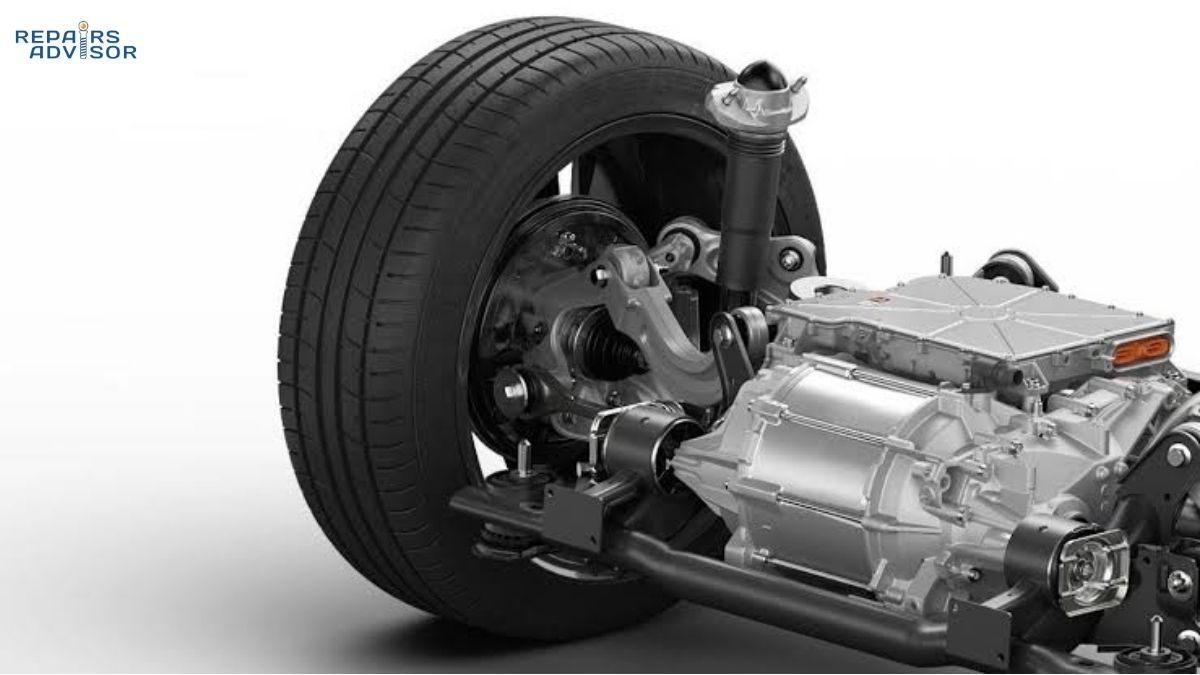
Electric compressors solve that problem by using a brushless three-phase motor instead of a belt connection, completely decoupling compressor operation from engine speed. Since there’s no engine at all on a pure EV, this is the only option; some hybrids run dual compressors — one electric, one belt-driven — to get the best of both approaches. Electric compressors run more efficiently, are more compact, and can weigh up to 20% less than a comparable belt-driven unit.
| Type | Drive Source | Runs With Engine Off? | Relative Weight/Efficiency | Typical Cost |
|---|---|---|---|---|
| Belt-Driven | Engine accessory belt | No | Heavier, engine-speed dependent | Lower part cost |
| Electric | Brushless 3-phase motor | Yes | Lighter (up to ~20% less), more efficient | $450–$1,200 |
This shift toward electric compressors is part of the same broader move toward electrified climate control seen in EV heat pump HVAC systems, and the electric motor controllers that manage brushless motor speed elsewhere in a vehicle use the same fundamental control approach as an electric compressor’s motor control electronics.
What Causes Compressor Failure
Loss of Lubrication — The #1 Cause
Insufficient oil is unquestionably the most common cause of compressor failure. The compressor depends on a specific type and quantity of oil circulating with the refrigerant for lubrication, and running low causes metal-on-metal contact inside the compressor, rapid wear, overheating, and eventually seizure.
Moisture Contamination
Moisture entering the system reacts with refrigerant oil to produce acids and sludge. That contamination corrodes the clutch coil windings, promotes rust on the clutch plate, and thickens the oil itself — increasing friction and wear specifically at the clutch bearing.
Clutch Seizure from Undercharge or Metal Debris
Clutch seizure often traces back to insufficient refrigerant flow from an undercharged system, or to metal debris circulating from a previously worn compressor or a failed dryer component.
Safety note: A seized compressor can also seize the drive belt it’s mounted on, which affects every other belt-driven accessory sharing that same belt. A compressor complaint is worth diagnosing before it escalates into a broader belt-drive failure — a stored body-system diagnostic trouble code can help confirm whether the fault is compressor-specific or part of a wider electrical issue.
Why Replacement Compressors Fail Prematurely
Metal Contamination from the Old Compressor
When a compressor fails internally, its moving parts shed microscopic metal particles and friction material throughout the system — sometimes referred to as “black death” contamination. Those particles act as an abrasive inside a brand-new replacement compressor if they’re not removed first.
Skipping the System Flush
Skipping a full system flush after an internal compressor failure is cited as the single biggest reason new compressors fail within weeks of installation. It takes surprisingly little debris — sometimes less than a tenth of a teaspoon — to restrict refrigerant and oil flow enough to cause a problem, so any contamination left behind circulates quickly and can seize the replacement unit.
Contaminated Condenser and Saturated Accumulator/Drier
A contaminated condenser left in the system is frequently the top cause of early replacement failure on its own — many modern condensers use multi-pass parallel-flow designs with internal passages too small to flush effectively, meaning a contaminated condenser sometimes has to be replaced outright rather than cleaned. The accumulator or receiver-drier also needs attention: its desiccant bag absorbs moisture, and once that bag has been exposed to open air during a repair, it’s saturated and no longer effective, which is why it’s typically replaced alongside the compressor.
Skill-level disclaimer: A proper post-failure flush, condenser evaluation, and accumulator/drier replacement require specialized flush equipment and legal refrigerant handling — this is a professional-tier repair. A DIY compressor swap that skips these steps is one of the most common reasons a brand-new compressor fails almost immediately.
Compressor Replacement Costs
Parts for the compressor itself typically run $400–$1,800, with labor adding $400–$1,200 across 4–8 hours depending on vehicle accessibility and job complexity. A refrigerant refill adds $100–$350. Supporting components commonly replaced at the same time include the accumulator or receiver-drier ($50–$180) and the expansion valve or orifice tube ($25–$150), along with new O-rings ($10–$40). Altogether, a full compressor replacement job commonly totals $850–$2,400. If the old compressor failed internally, the required system flush adds another 1–2 hours of labor to that total.
Maintaining Your A/C Compressor
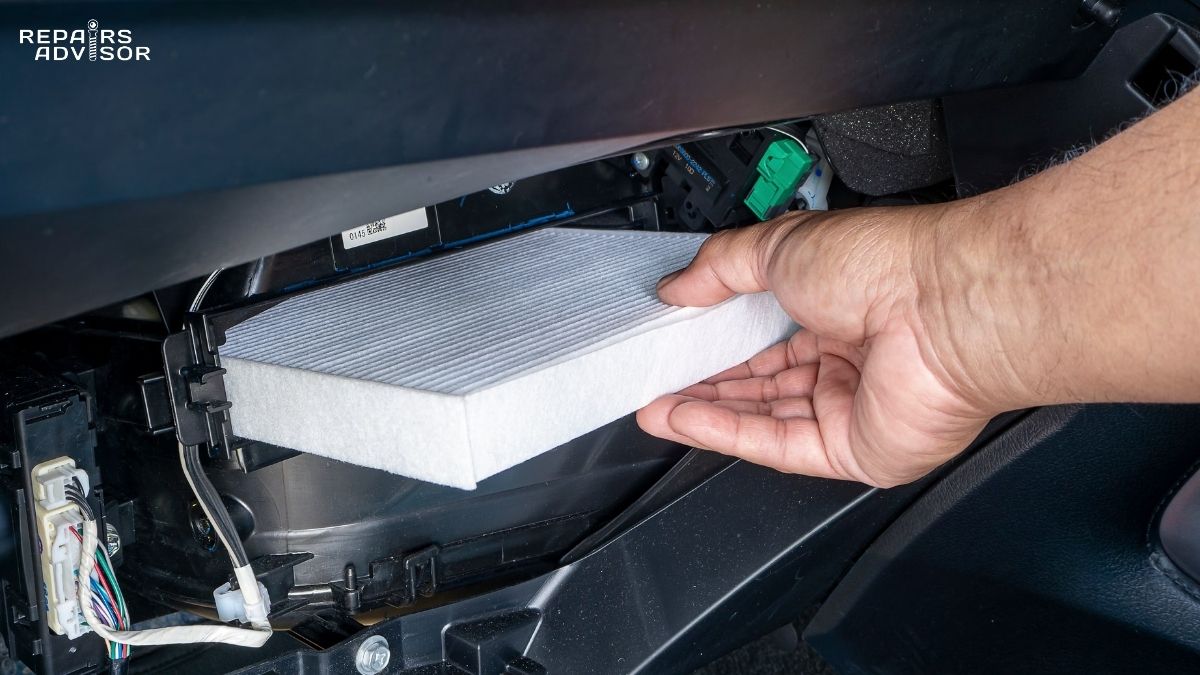
Running the air conditioning periodically, even outside of hot weather, helps keep the compressor’s internal seals lubricated and reduces the chance of a slow refrigerant leak going unnoticed until it’s caused lubrication problems. Addressing any refrigerant leak promptly matters for the same reason — low refrigerant charge accelerates the lubrication failure that’s the leading cause of compressor seizure. Before assuming a compressor problem, it’s also worth ruling out simpler causes of poor cooling, like a clogged cabin air filter restricting airflow, or a radiator fan issue limiting airflow across the condenser.
For a broader look at how the compressor fits into the rest of the A/C and engine systems, the vehicle systems library covers the surrounding components in more depth. Compressor specifications and refrigerant type vary by platform — Ford and Honda manuals both cover compressor part numbers and A/C system specs for their model lineups.
Automotive A/C Compressor: Frequently Asked Questions
Following the Outline Creation research protocol — reusing the research and 11 verified URLs already extracted for “automotive AC compressor” earlier in this session (no repeat web search or URL extraction needed).
What does the A/C compressor do?
It’s the power source for the entire refrigeration cycle — it pressurizes refrigerant gas so everything downstream (the condenser, expansion device, and evaporator) has something to work with. When an A/C system isn’t cooling, the compressor is often where diagnosis has to start, since a healthy compressor is the prerequisite for the rest of the cycle functioning.
What are the different types of A/C compressors?
There are three main designs: piston compressors, which come in fixed-displacement (cycles on/off via the clutch) or variable-displacement (runs continuously, output adjusted by an internal control valve) versions; scroll compressors, which use an orbiting scroll design for smoother, quieter operation with fewer moving parts; and rotary vane compressors, a fixed-displacement design that also runs smoother and quieter than piston units.
How does the compressor clutch engage?
Through electromagnetic attraction. When the system calls for cooling, current flows through the clutch coil, generating a magnetic field that pulls the clutch plate against the pulley, locking the compressor shaft to the belt-driven pulley. Turning the coil off disengages the plate, disconnecting the compressor from the drive belt entirely.
What’s the difference between belt-driven and electric compressors?
A belt-driven compressor is mechanically tied to engine speed and only runs while the engine runs. Electric compressors, used in hybrids and EVs, use a brushless three-phase motor instead — completely decoupling compressor operation from the engine, which matters directly on vehicles that shut the engine off at a stop. Electric compressors are also more compact and up to about 20% lighter. This mirrors the same electrified approach used in EV heat pump HVAC systems and relies on the same fundamentals as other electric motor controllers found elsewhere in a vehicle.
What causes A/C compressor failure?
Loss of lubrication is the single most common cause — insufficient oil leads to metal-on-metal contact, overheating, and eventual seizure. Moisture contamination is another major cause, reacting with refrigerant oil to form acids and sludge that corrode the clutch coil and thicken the oil. Clutch seizure specifically often traces back to an undercharged system or metal debris circulating from a previously worn component.
Why do replacement compressors fail prematurely?
Most often because the system wasn’t properly flushed after the old compressor failed. A failed compressor sheds microscopic metal particles throughout the system — sometimes called “black death” contamination — and it takes surprisingly little leftover debris to seize a brand-new unit. A contaminated condenser left in place, and a saturated accumulator/drier that wasn’t replaced, are also frequently cited as top causes of near-immediate repeat failure.
Do I need to flush the system after a compressor failure?
Yes — skipping the flush is cited as the single biggest reason new compressors fail within weeks of installation. A proper flush, condenser evaluation, and accumulator/drier replacement require specialized equipment and legal refrigerant handling, which makes this a professional-tier repair rather than a DIY compressor swap.
How much does compressor replacement cost?
The compressor part typically runs $400–$1,800, with labor adding $400–$1,200 across 4–8 hours. A refrigerant refill adds $100–$350, and supporting parts like the accumulator/drier ($50–$180) and the expansion valve or orifice tube ($25–$150) are commonly replaced at the same time. A full job commonly totals $850–$2,400, with an extra 1–2 hours if a system flush is needed.
Can worn belt tension affect compressor operation?
Yes — the compressor clutch assembly rides on the same drive belt as other engine accessories, so proper belt tension matters directly to reliable clutch engagement. It’s also worth noting a seized compressor can seize that same belt, affecting every other accessory sharing it.
How can I tell if it’s really the compressor and not something else?
Before assuming a compressor problem, it’s worth ruling out simpler causes of poor cooling — a clogged cabin air filter restricting airflow, or a radiator fan issue limiting airflow across the condenser, can both mimic a compressor complaint. A stored body-system diagnostic trouble code can also help confirm whether the fault is compressor-specific.