

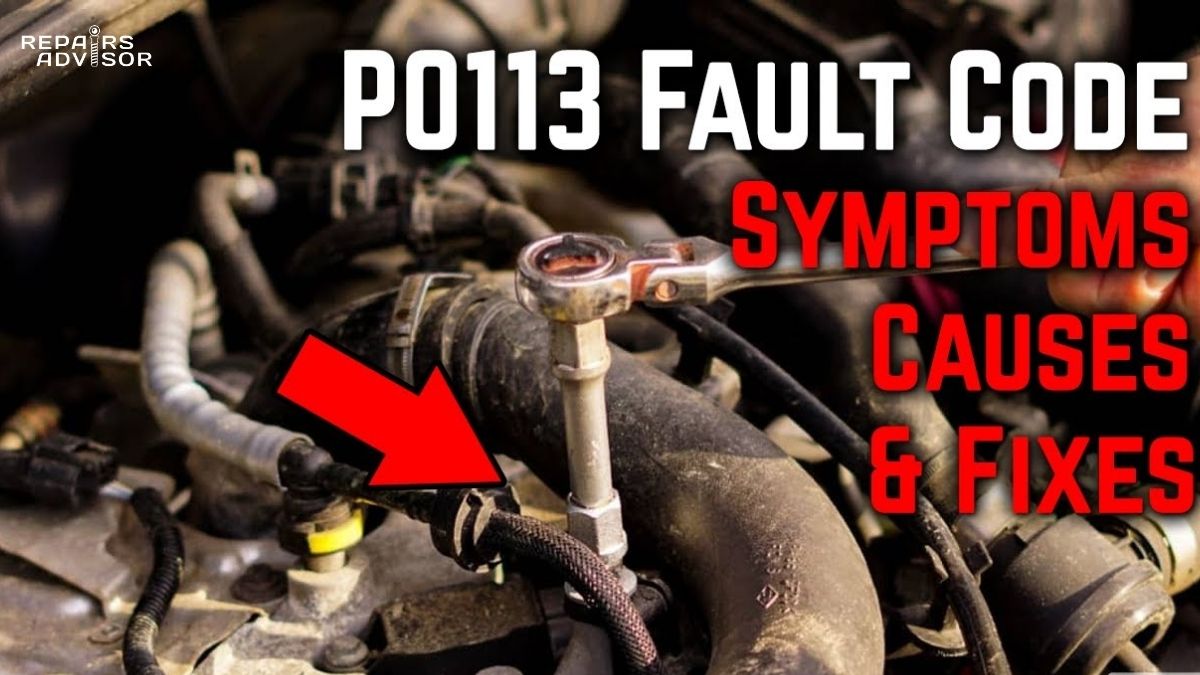
If a scan tool just pulled a P0113 code, the engine control module (ECM) has detected a voltage on the intake air temperature (IAT) sensor circuit that’s abnormally high — the exact opposite fault direction from P0112. Instead of a signal that’s stuck low, the computer is seeing a voltage that’s stuck high, which it interprets as unrealistically cold intake air, sometimes reading a static -40°F (-40°C) that obviously isn’t the real temperature.
Quick answer: P0113 means the ECM detected a voltage on the IAT sensor circuit that’s too high — most often caused by an open circuit from a disconnected or backed-out connector pin, a broken wire, a bad ground, or internal sensor failure. Check the connector before assuming you need a new sensor — a pin backing partly out of the housing, especially after recent intake work, is a well-documented cause of this exact code.
What Does the P0113 Code Mean?
The ECM uses IAT sensor input to calculate air density, which feeds directly into fuel mixture and ignition timing calculations. “Circuit high input” means the voltage on that signal wire is reading higher than the ECM expects for current conditions. A high voltage reading gets interpreted as extremely cold air — since colder air is denser, the ECM may respond by adding extra fuel on the assumption that the air coming in is colder and denser than it actually is.
It helps to compare this directly against P0112 (circuit low input), since the two codes are electrical opposites on the exact same sensor circuit. P0112 means the voltage is reading too low, which the ECM interprets as extremely hot air. P0113 means the voltage is reading too high, interpreted as extremely cold air. Same sensor, same wiring, opposite direction of electrical fault — which matters because it points your diagnostic starting point in a different direction: P0112 often traces back to a short to ground, while P0113 more often traces back to an open circuit. On many vehicles, the IAT sensor shares a housing with the MAF sensor, so it’s worth understanding that shared architecture before assuming you’re dealing with a fully separate component.
Common Symptoms of a P0113 Code
In many modern vehicles, a P0113 code produces no noticeable symptom beyond the illuminated check engine light. When symptoms do appear, they can include:
- Poor fuel economy, since the ECM injects extra fuel under the assumption that the air is colder and denser than it really is
- Cold-start difficulty, since the ECM can’t accurately regulate the mixture without reliable temperature data
- Rough idle
- Increased emissions or carbon buildup on spark plugs, from the resulting overly rich mixture
If you’ve cleared the code yourself, remember that resetting the check engine light only clears the stored fault — it won’t stay off if the open circuit or wiring issue underneath it is still present.
What Triggers a P0113 Code? Common Causes
Disconnected or Backed-Out Connector Pin
This is an especially common cause after recent intake work — a ground or signal pin working its way partly out of the connector housing creates an open circuit without any wiring actually being damaged.
Broken or Damaged Wiring
A broken wire typically defaults the circuit voltage toward 5V, which the ECM reads as an impossibly high, out-of-range signal. Understanding how wiring harnesses and grounding work together helps make sense of why a single broken wire on this circuit produces such a distinctly abnormal reading rather than a subtly wrong one.
Bad or Corroded Ground Connection
A failing ground reference can produce the same high-voltage symptom as a broken signal wire. Reviewing how ground systems work is useful background, since ground faults are easy to overlook when all the visible attention goes to the signal wire instead.
Internal Sensor Failure (Shorted to Power)
A sensor that’s failed internally by shorting to a power source can also produce a high-voltage reading identical to what an open circuit would cause, which is why resistance testing (covered below) matters for telling the two apart.
Corroded or Loose Connectors
Corrosion or bent pins can create an open or high-resistance connection that behaves electrically just like a broken wire, even when the harness itself is fully intact.
P0113 vs. P0112 – Understanding the Opposite Fault
Because P0112 and P0113 live on the same sensor circuit, it’s worth being clear about the distinction before you start testing. P0112 (low input) reads as extremely hot air and often points toward a short to ground somewhere in the circuit. P0113 (high input) reads as extremely cold air and more often points toward an open circuit — a break, a disconnected pin, or a failed reference voltage supply. The same general diagnostic architecture shows up on other sensor circuits too — how coolant temperature sensors work follows a similar low/high fault pattern, and Code P0128 is a useful parallel example on that separate sensor circuit.
How to Diagnose a P0113 Code
Initial Scan and Live Data Check
Confirm P0113 is present without other conflicting IAT-related codes, then check live IAT voltage with your scan tool. Normal cold-engine voltage is roughly 0.5V, and readings above roughly 2.5V at idle suggest a high-circuit fault — though you should confirm the exact spec against your vehicle’s service manual rather than treating this as universal. For a refresher on the full scanning and clearing process, this OBD code overview covers the basics.
Visual Inspection of Connector and Wiring
Check specifically for backed-out pins, especially if intake work was done recently, along with frayed wires or corrosion at the connector.
Resistance Testing
With the connector unplugged, measure resistance across the sensor terminals. Resistance should change as temperature changes — a constant reading regardless of temperature confirms a bad sensor rather than a wiring issue. A reading above roughly 10 kΩ suggests an open circuit, while a near-zero reading suggests a short instead.
Voltage and Continuity Testing
With the key on and engine off, check for the expected 5V reference signal at the connector. Then perform a continuity check from the connector back to the ECM pin — resistance above roughly 100 ohms indicates a harness fault rather than a clean connection. Since this circuit shares reference voltage and grounding architecture with other sensors on many vehicles, it can help to cross-check against how MAP sensors work and how throttle position sensors work if you want to rule out a shared circuit problem rather than an IAT-specific one.
How to Fix a P0113 Code
Reseat the Connector First
Disconnect the battery before working on the connector, then check that every pin is fully seated in its housing — especially if you’ve recently done intake work. This single check resolves a surprising number of P0113 cases before any wiring repair or part replacement is needed.
Repair Broken or Corroded Wiring
If testing confirms a broken wire or corroded connection, disconnect the battery before repairing or replacing the affected section of harness.
Replace the IAT Sensor
If resistance testing confirms the sensor has failed internally, replacement is typically straightforward on most vehicles. Confirm the correct connector type and thread size for your specific vehicle before ordering the part.
Is It Safe to Drive with a P0113 Code?
In many cases, there’s no noticeable drivability symptom beyond the check engine light in the short term, and the vehicle remains drivable. That said, the ECM is running on an inaccurate assumed air temperature rather than a real reading, which isn’t ideal for long-term fuel and timing calculations. Rather than relying on unverified claims about specific damage costs or timelines, the simplest approach is not to leave a known fault undiagnosed indefinitely — get it checked when convenient rather than putting it off long-term.
Engine Category and Vehicle-Specific Notes
P0113 is a generic OBD-II code, meaning it’s defined consistently across most makes and models rather than being tied to one manufacturer — it shows up on vehicles from Ford, Toyota, Chevrolet, Chrysler, and many others. For broader engine-system reference material, the engine category page is a useful starting point. If you’re working on a Chevrolet specifically, the Chevrolet brand manual page covers manufacturer-specific service references worth checking alongside the generic diagnostic steps above.
When to See a Professional
If you’ve reseated the connector, tested the wiring, and confirmed the sensor itself is within spec, but the code keeps returning, that’s a sign the fault may be at the ECM level or somewhere less accessible in the wiring than a home garage setup can easily test. A professional with proper wiring diagrams and diagnostic equipment can chase down these harder-to-isolate faults more efficiently than continued trial-and-error testing. Repairs Advisor’s digital repair manuals are built to support DIY diagnosis and repair with OEM-level reference information — they’re a research and reference tool, not a substitute for hands-on professional service when a repair is beyond your tools or comfort level.
FAQ: Code P0113 – Intake Air Temperature Sensor Circuit High Input
What does the P0113 code mean?
P0113 means the ECM detected a voltage on the intake air temperature (IAT) sensor circuit that’s abnormally high, which the computer interprets as unrealistically cold intake air — sometimes reading a static -40°F/-40°C that obviously isn’t the real temperature. It’s the exact opposite fault direction from P0112.
What’s the difference between P0112 and P0113?
They’re on the same sensor circuit but represent opposite electrical faults. P0112 (low input) means the voltage reads too low, interpreted as extremely hot air, and often traces back to a short to ground. P0113 (high input) means the voltage reads too high, interpreted as extremely cold air, and more often traces back to an open circuit — a broken wire, disconnected pin, or failed reference voltage.
What causes a P0113 code?
The most common causes are electrical: a connector pin that’s backed partly out of its housing (especially common after recent intake work), a broken wire, a bad ground, or corroded/loose connectors. Reviewing how wiring harnesses and grounding work together helps explain why a single broken wire or ground fault produces such a distinctly abnormal reading. Internal sensor failure — shorted to a power source — is also possible but less common than a connection issue.
What are the symptoms of a P0113 code?
Often there’s no noticeable symptom beyond the check engine light. When symptoms do show up, they can include poor fuel economy (the ECM adds extra fuel assuming colder, denser air), cold-start difficulty, rough idle, and increased emissions or carbon buildup from the resulting rich mixture.
Is it safe to drive with a P0113 code?
In most cases, yes, short-term — many vehicles show no noticeable drivability change. That said, the ECM is running on an inaccurate assumed air temperature rather than a real reading, so it’s best not to leave a known fault undiagnosed indefinitely. Be skeptical of specific damage-cost or timeline claims for this code online — they’re often unverified.
How do you test for a P0113 code?
Check live IAT voltage with a scan tool — normal cold-engine voltage is roughly 0.5V, and readings above roughly 2.5V at idle suggest a high-circuit fault (confirm the exact spec against your service manual). With the connector unplugged, measure resistance across the sensor terminals — it should change with temperature; a constant reading regardless of temperature confirms a bad sensor, while resistance above roughly 10 kΩ suggests an open circuit. A continuity check from the connector to the ECM pin (resistance above roughly 100 ohms indicates a harness fault) helps isolate wiring problems.
Is a backed-out connector pin really a common cause?
Yes — it’s one of the most frequently cited causes of P0113, especially after intake work where the connector was disconnected and reconnected. Checking that every pin is fully seated is worth doing before assuming you need a new sensor or wiring repair.
How do you fix a P0113 code?
Start by reseating the connector and confirming every pin is fully seated — disconnect the battery first. If wiring testing reveals a broken or corroded section, repair or replace it (again, with the battery disconnected). If resistance testing confirms the sensor itself has failed internally, replacement is typically straightforward, but confirm the correct connector type and thread size before ordering.
Is P0113 related to other sensor codes?
The same low/high fault pattern shows up on other sensor circuits — how coolant temperature sensors work follows a similar architecture, and Code P0128 is a useful parallel example on that separate circuit. It can also help to cross-check MAP sensors and throttle position sensors if you suspect a shared reference-voltage or grounding issue rather than an IAT-specific fault.
Is P0113 specific to certain vehicle makes?
No — it’s a generic OBD-II code that appears across most makes and models, including Ford, Toyota, Chevrolet, and Chrysler vehicles. See the Chevrolet brand manual page for manufacturer-specific notes, or the engine category page for broader reference material.
When should I stop DIY troubleshooting and see a professional?
If you’ve reseated the connector, tested the wiring, and confirmed the sensor is within spec, but the code keeps returning, the fault may be at the ECM level or somewhere less accessible than a home garage setup can easily test. Repairs Advisor’s digital repair manuals are a reference and research tool to support that diagnosis — they aren’t a substitute for hands-on professional service when a repair is beyond your tools or comfort level.