

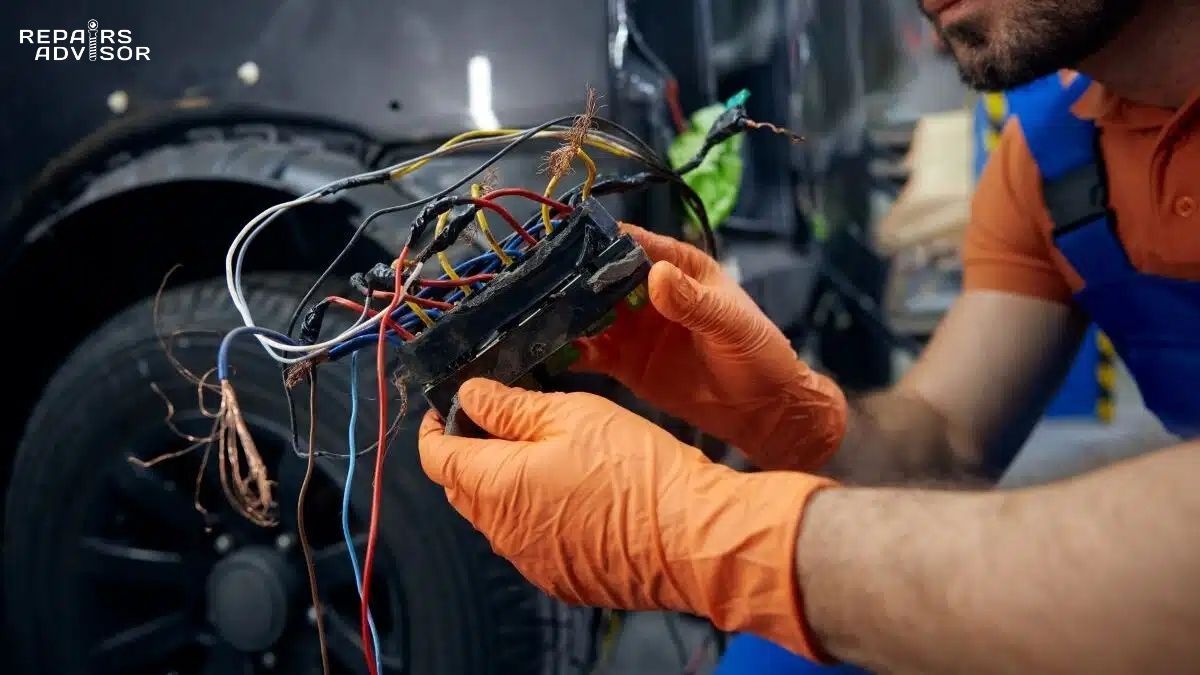
Every light, sensor, and control module in your car depends on two things that almost nobody thinks about until something stops working: the wiring harness that carries power and signals, and the grounding system that gives that current a path home. When wiring harnesses and grounding are healthy, they’re invisible. When a ground goes bad, the symptoms are so scattered and strange that people often replace perfectly good batteries, alternators, and starters chasing a problem that a single corroded connection caused. Understanding how this electrical backbone works makes you far better at diagnosing the gremlins it produces.
Quick Answer
A wiring harness is the bundled network of wires, connectors, and terminals that distributes power and signals throughout a vehicle, while grounding is the return path that completes every circuit, normally through the car’s metal chassis and engine block. Most modern vehicles use a single-wire, negative-ground system, so a clean, low-resistance ground is essential to proper operation. A healthy ground typically shows a voltage drop of about 0.1 volts or less under load; readings around 0.5 volts or higher point to corrosion, loose connections, or a failing strap.
What a Wiring Harness Is, and Why Grounding Matters
A wiring harness is the organized bundle of conductors that runs through a vehicle, tying the battery, fuses, modules, sensors, and accessories together into one managed network. Rather than dozens of loose wires snaking through the body, the harness groups them with terminals, connectors, and protective covering so they can be routed, secured, and serviced predictably. If you want the full picture of how these bundles are built and routed, our guide to how wiring harnesses work breaks down the construction in detail.
Grounding is the other half of the story, and it’s the half people underestimate. Electricity only does work when it can complete a full loop: current leaves the battery’s positive terminal, flows through a wire to a load such as a headlight, and then has to return to the battery’s negative terminal. That return leg is the ground. In a car, the metal body, chassis, and engine act as the common return conductor, an approach known as a single-wire or negative-ground system. It saves an enormous amount of wiring because components only need one feed wire; the vehicle’s structure handles the return. The trade-off is that the quality of those metal-to-metal connections becomes critical, which is why our overview of how ground systems work is worth keeping handy. The short version: any circuit is only as good as its ground.
Inside the Harness: Wires, Gauges, Connectors, and Routing
Not all wire in a harness is the same. Conductor thickness is measured in AWG (American Wire Gauge), and it’s chosen for the current the circuit carries. High-current paths like the feed to the starter or charging system use thick, low-gauge cable, while signal wires for sensors can be very thin. Get this wrong and you get voltage drop and heat: an undersized wire behaves like a kinked hose, restricting flow and starving the component at the end of it. This is also why aftermarket accessory installs go wrong so often, with too-small wire causing dim or erratic behavior.
Around those conductors sits everything that keeps them reliable: insulation, crimped terminals, sealed connectors, rubber grommets where the harness passes through metal, and conduit or loom that guards against abrasion. Routing matters as much as the parts. Factory harnesses are clipped along paths that avoid heat sources, sharp edges, and pinch points, and they’re isolated from vibration that would otherwise fatigue a wire until it cracks internally. The harness is also where circuit protection lives. Fuses and relays sit at distribution points so a fault in one branch doesn’t take down the whole system, a function explained in our guide to how fuses, relays, and power distribution work.
Professional Insight: Shared Returns and Common Impedance
From a design standpoint, engineers rarely give every component its own dedicated ground. Doing so would multiply ground points, mass, and assembly cost. Instead they consolidate returns, grouping components onto shared ground studs, then carefully assess where that sharing could cause trouble. The risk is the common impedance path: when two loads share a length of ground conductor, the current draw of one can shift the ground reference of the other. A heavy load pulling current through a shared return raises the local ground potential, and a sensitive component referencing that same point sees its “zero volts” move. This is the root cause behind a surprising number of intermittent, load-dependent faults.
How Grounding Works: The Return Path Explained
Trace the ground path on a typical vehicle and it starts at the battery’s negative terminal. From there, a heavy cable bonds the battery to the engine block, and the block ties into the body or chassis. Because the engine is a massive chunk of low-resistance metal, it makes an excellent grounding anchor, which is why so many high-current components reference it. The battery itself is the reference for the whole system, and understanding its role helps; our explainer on how the 12V battery works covers why that negative terminal anchors everything.
The most demanding ground job on the car happens during cranking. The starter motor draws enormous current, all of which has to return through the battery-to-engine ground cable. If that cable or its connections are degraded, the starter can’t get the current it needs, and you get slow, labored cranking or just a rapid clicking. On the charging side, the alternator also depends on a solid ground to push charge back into the battery; a weak ground here can quietly undercharge the battery even while the car runs.
You’ll often see two grounding straps under the hood: one from the battery to the engine, and a smaller one from the engine to the body. It’s tempting to assume more grounds are always better, but that isn’t how it works. When multiple ground paths connect the same two points, they share current, and the proportions depend on each path’s condition. If one degrades, the others suddenly carry more, sometimes routing heavy current through circuits that were never meant to handle it.
Professional Insight: Star Grounding and Signal Returns
Sensitive electronics are grounded with more discipline than a headlight. The preferred approach is star-point grounding, where grounds are referenced back to a single chosen point rather than tapped wherever convenient. This keeps high-current returns from contaminating low-level signal references. In practice, that means sensor grounds are returned to dedicated control-module ground pins, not bolted to the nearest chassis point, so the sensor’s reference stays clean. There’s also a noise dimension: current flowing in a loop radiates interference, so designers keep ground loop areas small and reference shields at a single end. The guiding principle for these circuits is that low impedance matters more than the simple resistance reading a multimeter shows, because a connection that looks fine at DC can behave poorly at higher frequencies.
Why Grounding Is Critical for Modern Electronics
An older car with a carburetor and a handful of bulbs is fairly forgiving about grounds. A modern vehicle is not. Today’s cars run dozens of control modules and sensors that depend on precise, stable voltage references to interpret signals correctly. When a shared ground becomes unstable, the data those modules exchange can become corrupted or drop out entirely. The role grounds play in sensor accuracy is part of why engine management systems are so sensitive to even small reference shifts at higher engine speeds.
This is also why a single bad ground can light up your dashboard like a holiday display. Because many systems share grounding, one poor connection can trigger several unrelated warning lights at once, including ABS, traction control, and the check engine light, when nothing is actually wrong with any of those systems. The same instability creates electromagnetic interference that can disrupt communication networks; a noisy ground is a classic source of bus errors, and the whine or static some drivers hear through their speakers is a familiar symptom of the same problem. If you’re curious how those data networks move information between modules, our guide to how vehicle networks and CAN bus work explains why they’re so dependent on a clean reference.
Signs of a Bad Ground or Harness Problem
Bad grounds are masters of disguise because they mimic the failure of whatever component they happen to be starving. The classic signs include headlights that dim or flicker, especially when you switch on another load like the blower or wipers; slow or hesitant cranking with a clicking starter; gauges that read erratically; accessories that cut out unpredictably; and warning lights that appear in clusters. A weak ground at the charging system can even masquerade as a failing voltage regulator or alternator, which is exactly why so many of those parts get replaced unnecessarily.
The reason this matters is that the cheapest fix in automotive electrics is frequently the most overlooked. Before condemning a battery, alternator, or starter, the grounds deserve a look. When poor grounds disrupt the data buses, you may also see network communication trouble codes; our reference on U-code network communication diagnostics covers the family of codes that often accompany ground-related faults.
What Causes Grounds to Fail
The failure modes are unglamorous but predictable. Corrosion leads the list, driven by road salt and moisture that creep into terminals and form an insulating crust between the wire and the metal it bolts to. Vibration slowly loosens the bolts that hold ground straps, and braided straps themselves can fatigue and break strand by strand. Paint, rust, or undercoating trapped under a terminal acts as an insulator even when the connection looks tight. And careless prior repairs are a common culprit; a ground strap removed during an engine or transmission job and never reinstalled leaves behind nothing but a telltale witness mark on the firewall.
How Grounds Are Tested, and What Good Looks Like
The most reliable way to evaluate a ground is a voltage drop test, performed with the circuit live and under load, because that’s when a marginal connection reveals itself. With a digital multimeter set to DC volts, you measure the voltage lost across a ground connection while the circuit is working. A healthy ground typically reads about 0.1 volts or less; readings near 0.5 volts or higher indicate excessive resistance that needs attention. By walking the meter along the ground path checkpoint by checkpoint, from the component back toward the battery, you can isolate exactly where the resistance is hiding.
A resistance (ohm) test is the other common check, useful for confirming continuity, but it comes with an important caveat covered in the safety note below. Visual inspection still earns its keep: look for green or white crusty buildup, loose or wiggling straps, and clean bare-metal contact at every ground point. Common ground locations include the engine block, the firewall, inner fenders, and various body brackets, and the points near recently installed components deserve extra scrutiny. The same testing logic applies to switched circuits controlled by automotive relays, where a poor ground on the control side can cause a relay to behave intermittently.
Safety Note
Always disconnect the negative battery terminal before performing a resistance test, and never measure resistance on a live circuit; doing so gives false readings and can damage the meter. Keep tools from bridging the battery terminals, since a dead short across a 12-volt battery delivers enormous current and can cause burns or fire. These checks fall in the do-it-yourself range for most owners, but treat the battery with respect.
Maintenance, Good Repair Practice, and When to Call a Professional
Prevention is mostly about keeping connections clean and tight. During routine maintenance, glance over the visible ground straps, wiggle them to check for looseness, and watch for corrosion at the battery terminals and main engine ground. Cleaning a ground point back to bare metal and applying dielectric grease or a corrosion inhibitor goes a long way, and owners in salt-belt regions benefit from protecting undercarriage ground points before winter. Snug the fasteners firmly without stripping them.
If you add accessories, ground them properly rather than tapping into an existing factory ground. Run a dedicated wire of the correct gauge to clean bare metal, which avoids creating the kind of shared-return noise problems described earlier. When you do repair a ground, clean both the terminal and the mounting surface, use correctly sized wire, and make a proper crimped or soldered connection sealed with heatshrink rather than a twist-and-tape splice that will corrode and loosen.
Some situations call for a professional. Intermittent faults that span multiple systems can be genuinely difficult to trace and often reward the experience and equipment a good technician brings. Anything involving the high-voltage grounding and isolation of a hybrid or electric vehicle is strictly professional territory, not a do-it-yourself task, because the hazards and the specialized procedures put it well beyond general maintenance. Suspected harness damage hidden behind trim or buried in the dash also tends to be worth expert attention. For a broader tour of how the electrical system fits alongside the rest of the car, our vehicle systems and parts explained hub connects the related guides. Whatever you tackle, remember that grounds are the quiet foundation under everything electrical, and a few minutes spent verifying them often saves hours of chasing symptoms.
Wiring Harnesses & Grounding: Frequently Asked Questions
Grounding problems cause some of the most confusing electrical faults a driver will ever meet, partly because a single bad connection can imitate the failure of an expensive part. These answers cover the questions owners and DIYers ask most often about wiring harnesses and grounding, from spotting a bad ground to testing one safely.
What’s the difference between a wiring harness and the grounding system?
The wiring harness is the bundled network of wires, connectors, and terminals that carries power and signals out to every component, explained in more depth in our guide to how wiring harnesses work. Grounding is the return side of those same circuits, the path current takes back to the battery to complete the loop. In most vehicles that return path runs through the metal body, chassis, and engine rather than through dedicated wires, an arrangement our overview of how ground systems work describes as a single-wire, negative-ground system. The harness delivers; the ground returns. Both have to be healthy for anything to function.
What are the symptoms of a bad ground in a car?
Bad grounds tend to produce scattered, intermittent symptoms rather than one clear failure. Common signs include headlights that dim or flicker, especially when another load such as the blower or wipers switches on; slow or hesitant cranking accompanied by a clicking starter motor; gauges that jump or read incorrectly; accessories that cut out unpredictably; and electrical noise like buzzing or static in the audio system. The hallmark of a ground problem is that several unrelated things misbehave at once, which is the clue that the fault lies in something they share.
Can a bad ground really cause multiple warning lights at the same time?
Yes, and it’s one of the most misleading symptoms in modern electrics. Because many control modules share grounding, one unstable connection can shift the voltage reference several systems rely on, triggering lights like ABS, traction control, and the check engine light together even though those systems are fine. A noisy or unstable ground can also disrupt the data networks that modules use to talk to one another, which is why U-code network communication faults sometimes show up alongside ground problems. Sensitive sensors are especially affected, since the engine management system depends on stable references to interpret their signals.
How do I test a ground with a multimeter?
The most reliable check is a voltage drop test, done with the circuit live and under load because that’s when a weak ground reveals itself. Set a digital multimeter to DC volts and measure the voltage lost across the ground connection while the circuit is working. A healthy ground typically reads about 0.1 volts or less, while readings near 0.5 volts or higher point to excessive resistance. By moving the meter along the ground path one checkpoint at a time, from the component back toward the battery, you can pin down where the resistance is hiding. A resistance test is also useful, but only with the battery disconnected, as noted in the safety question below.
Why are there two ground straps, and is more grounding better?
Many vehicles have one heavy strap from the battery to the engine and a smaller one from the engine to the body. The battery-to-engine cable handles the big jobs, including the huge current the starter pulls during cranking, while the engine-to-body strap typically handles return and noise control. It’s natural to assume that adding more grounds can only help, but that isn’t quite true. When several ground paths connect the same two points, they share current in proportion to their condition, so if one degrades the others suddenly carry more, occasionally routing heavy current through circuits that weren’t designed for it. Clean, correctly sized grounds in the right places beat simply adding more.
Can a bad ground drain my battery or cause charging problems?
It can do both. The alternator needs a solid ground to push charge back into the battery, and a weak ground here can quietly undercharge it even while you drive. Ground faults can also create small parasitic paths that pull current when the car is off. Because these symptoms mimic a failing battery, alternator, or voltage regulator, plenty of those parts get replaced unnecessarily when the real culprit was a corroded ground. Checking the grounds before buying a new battery or alternator is one of the most cost-effective habits in electrical diagnosis.
How do I fix or improve a bad ground?
Most ground repairs come down to restoring clean metal-to-metal contact. Disconnect the battery, then clean both the terminal and its mounting surface back to bare metal, removing any corrosion, paint, or undercoating that acts as an insulator. Reattach with a correctly sized terminal, tighten firmly without stripping the fastener, and protect the joint with dielectric grease or a corrosion inhibitor. If you’re adding an accessory, run a dedicated ground wire of the proper gauge to clean bare metal rather than splicing into an existing factory ground, which helps avoid introducing noise into other circuits. Make permanent connections with a proper crimp or solder and heatshrink instead of twist-and-tape.
Is it safe to test and repair grounds myself, or should I call a professional?
Cleaning and testing 12-volt ground connections is within reach for most owners, with one firm rule: always disconnect the negative battery terminal before any resistance test, never measure resistance on a live circuit, and keep tools from bridging the battery terminals, since a dead short across a 12-volt battery can cause burns or fire. Call a professional when faults are intermittent and span multiple systems, when you suspect harness damage hidden behind trim or in the dash, and always for anything involving a hybrid or electric vehicle’s high-voltage grounding and isolation, which is strictly professional work and not a do-it-yourself task. For a wider view of how grounding fits with the rest of the car’s systems, our vehicle systems and parts explained hub links the related guides.