

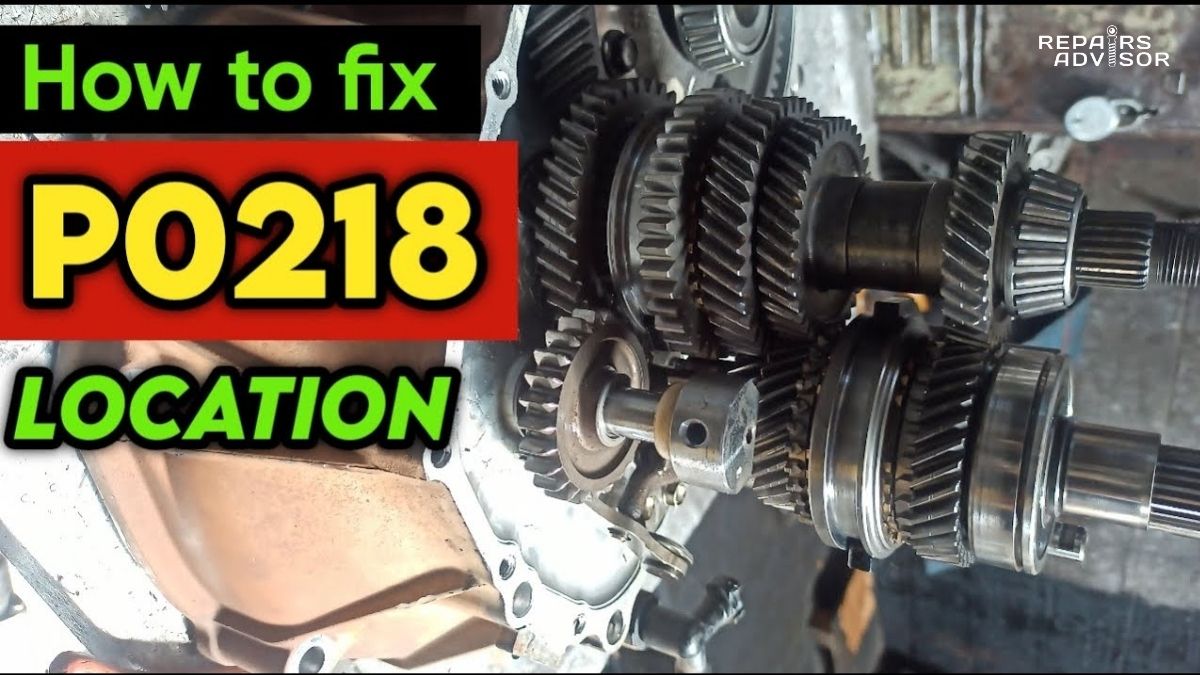
If your scan tool pulled a P0218 code, the powertrain control module (or transmission control module) has detected that transmission fluid temperature exceeded its allowable limit — commonly cited around 290°F on many vehicles — for a sustained period. This isn’t a minor sensor quirk to shrug off; overheated transmission fluid loses its ability to lubricate and cool internal components properly, and many vehicles respond by dropping into limp-home mode to protect the transmission from further damage.
Quick answer: P0218 means transmission fluid got too hot for too long — usually from towing beyond the vehicle’s rated capacity, a restricted or failing transmission cooler, low or degraded fluid, or a faulty temperature sensor giving a false high reading. Because sustained overheating can cause real internal transmission damage, this deserves more urgency than a typical sensor-only code. If you’re seeing slipping, hard shifts, or limp-mode behavior, don’t keep driving on it — see the driving-safety section below.
What Does the P0218 Code Mean?
The transmission control module (TCM) — sometimes integrated with the PCM — continuously monitors transmission fluid temperature through a dedicated sensor. When that reading exceeds the manufacturer’s allowable threshold for an extended duration, P0218 sets. Many vehicles respond with a protective “limp-home” strategy: reduced shift pressure, a capped engine output, or a restricted gear range, all intended to reduce heat generation and buy the transmission some protection while you get it looked at. That protective response is doing its job, not malfunctioning on its own — the actual problem is whatever’s driving the temperature up in the first place.
Before diagnosing further, it helps to understand how automatic transmissions work, since heat generation is tied directly to how the transmission’s hydraulic and mechanical systems operate under load. If you’re not sure what type of transmission your vehicle has, this quick reference can help confirm before you start pulling apart the wrong system.
It’s also worth noting that the specific temperature threshold and limp-home behavior for P0218 vary by manufacturer and even by model year — some vehicles cap shift range and hold lower gears longer to reduce load, while others simply limit throttle response. Neither strategy fixes the underlying heat problem; both are designed purely to buy time until the vehicle can be serviced.
Common Symptoms of a P0218 Code
- Illuminated check engine light, and on many vehicles, a dedicated transmission temperature warning light
- Slipping, hard or delayed shifts, or a transmission that feels unresponsive
- Limp-mode behavior: capped engine power and a restricted shift range
If you clear the code yourself, keep in mind that resetting the check engine light doesn’t do anything to address the heat condition itself — if the root cause is still present, the code (and the limp-mode protection it triggers) will return.
What Triggers a P0218 Code? Common Causes
Towing Beyond Rated Capacity
Excessive towing uphill, or a trailer that exceeds your vehicle’s rated towing capacity, puts sustained extra load on the torque converter and the transmission as a whole. This is one of the most common causes of P0218, particularly relevant if you’re working on a vehicle from the trucks category that regularly tows.
Restricted or Failing Transmission Cooler
Debris or an internal blockage in the transmission cooler or its lines prevents fluid from dissipating heat properly, even if everything else about the transmission is healthy.
Low or Degraded Transmission Fluid
Low fluid level, or fluid that’s broken down and turned dark or burnt instead of staying bright red, increases friction between internal components regardless of how well the cooling system itself is working. Understanding how ATF and friction materials work makes it clear why fluid condition matters just as much as fluid quantity.
Faulty Temperature Sensor, Wiring, or TCM Communication
A sensor stuck reading high, or corroded, shorted, or open wiring between the sensor and the TCM, can trigger a false P0218 even when fluid temperature is actually normal. Since the sensor’s data has to make it to the TCM cleanly to be trusted, it’s worth understanding how transmission mechatronics work — the electronic control layer that reads, interprets, and acts on that sensor data.
Underlying Engine Cooling System Problems
On some vehicles, the transmission cooler shares circuitry with the engine’s cooling system, so an overheating engine can drag transmission fluid temperature up right along with it. If you’re troubleshooting a P0218 alongside engine temperature symptoms, check how engine cooling systems work, how cooling system thermostats work, and how radiator fans work as part of the same diagnostic pass.
How Does P0218 Relate to Other Transmission Codes?
Because P0218 depends on clean sensor communication reaching the TCM, it can sometimes appear alongside broader transmission control issues. Code P0700 – Transmission Control System Malfunction is a general flag that the TCM has detected a fault somewhere in the transmission control system, and it’s worth checking for whenever P0218 shows up, since the two can share a root cause in communication or wiring problems.
How to Diagnose a P0218 Code
Scan for Codes and Live Data
Start with a scan tool pull for P0218 and any pending codes, and record live sensor voltage or temperature data while the transmission is operating. If you need a refresher on the full scanning and code-clearing process, this OBD code overview covers the basics.
Verify Actual Fluid Temperature
Compare the sensor’s reported value against an independent reading — an infrared thermometer aimed at the transmission pan, or a calibrated dipstick thermometer, both work. A discrepancy beyond roughly 15°C (27°F) between the sensor and your independent reading points toward a sensor or communication fault rather than genuinely overheated fluid.
Check Wiring, Connector, and Resistance
Inspect the sensor’s connector for corrosion, bent pins, or damaged wiring, then test circuit resistance against the manufacturer’s spec — a commonly cited reference point is around 2 kΩ at 25°C, but confirm the exact figure against your vehicle’s service manual rather than assuming it applies universally.
Confirm TCM Communication
Use your scan tool’s bus-monitor function to verify the TCM is actually receiving sensor data cleanly, without communication errors. This step helps distinguish a genuine overheating condition from a communication fault masquerading as one.
How to Fix a P0218 Code
Check Fluid Level and Condition First
Let the vehicle cool completely before checking fluid — hot transmission fluid and the components around it can cause burns. Once it’s safe, check fluid level and color; fluid that’s turned dark or has a burnt smell indicates thermal degradation and needs to be changed regardless of what else you find.
Inspect and Clean the Transmission Cooler
Flush debris or blockage from the cooler and its lines to restore proper heat dissipation. A cooler that’s doing its job is one of the simplest ways to prevent this code from recurring.
Replace a Faulty Temperature Sensor
If wiring and connector testing come back clean but the sensor’s readings remain inconsistent with your independent temperature check, replacing the sensor resolves the fault without needing to address the cooling system itself.
Adjust Towing Habits or Add an Auxiliary Cooler
Confirm any loads you’re towing stay within your vehicle’s rated towing capacity. If you tow frequently or drive under demanding conditions, an auxiliary transmission cooler with its own temperature gauge is a reasonable preventive upgrade that lets you keep an eye on fluid temperature before it becomes a problem. This is particularly worth considering if you regularly tow near your vehicle’s maximum rated capacity, since factory cooling systems are often sized for occasional rather than constant heavy-load use.
None of these fixes are mutually exclusive — a vehicle that’s overheated once from towing may have both degraded fluid from that event and a cooler that needs flushing, so it’s worth checking fluid condition and cooler flow together rather than assuming a single cause explains the whole picture.
Is It Safe to Drive with a P0218 Code?
Treat P0218 with more urgency than a typical sensor-only code — sustained overheated transmission fluid can cause real internal damage that a simple sensor fault wouldn’t. If you suspect overheating while driving, find a safe place to pull over, avoid abrupt braking or sudden maneuvers, shut off the engine, and give the transmission time to cool before continuing. If you’re seeing slipping, hard shifts, or limp-mode behavior, get the vehicle diagnosed promptly rather than continuing to drive on it.
When to See a Professional
Internal transmission damage, TCM communication faults, and transmission cooler repairs often call for professional-grade diagnostic tools, and in some cases partial transmission disassembly to inspect internal components. If your own checks — fluid level and condition, visible cooler damage, obvious wiring issues — don’t resolve the code, that’s a good point to bring in a professional rather than continuing to troubleshoot on your own. This is especially true if the code keeps returning after a fluid change and cooler inspection, since repeat failures often point to something happening inside the transmission itself, well beyond what a fluid top-off or sensor swap can address. Repairs Advisor’s digital repair manuals are built to support this kind of DIY diagnosis and repair with OEM-level reference information — they’re a research and reference tool, not a substitute for hands-on professional service when a repair is beyond your tools or comfort level.
FAQ: Code P0218 – Transmission Fluid Over Temperature Condition
What does the P0218 code mean?
P0218 means the transmission control module (or PCM, on vehicles without a separate TCM) detected transmission fluid temperature exceeding its allowable limit — commonly cited around 290°F on many vehicles — for a sustained period. Many vehicles respond by entering limp-home mode: reduced shift pressure, capped engine output, or a restricted gear range, all meant to protect the transmission while you get it checked out.
What causes a P0218 code?
The most common causes are towing beyond the vehicle’s rated capacity, a restricted or failing transmission cooler, low or degraded transmission fluid, an overheating engine dragging transmission temperature up with it, or a faulty temperature sensor/wiring giving a false high reading. It’s worth checking all of these rather than assuming just one applies, since a single overheating event can leave you with degraded fluid and a partially clogged cooler at the same time.
What are the symptoms of a P0218 code?
Expect an illuminated check engine light and, on many vehicles, a dedicated transmission temperature warning light. You may also notice slipping, hard or delayed shifts, or a transmission that feels unresponsive — often tied to the vehicle’s limp-mode protection kicking in.
Is it safe to drive with a P0218 code?
Treat this one with more urgency than a typical sensor-only code. Sustained overheated transmission fluid can cause real internal damage, not just a false alarm. If you suspect overheating while driving, pull over safely, avoid abrupt braking or sudden maneuvers, shut off the engine, and let it cool before continuing. If you’re seeing slipping or limp-mode behavior, get it diagnosed promptly rather than continuing to drive on it.
How do you fix a P0218 code?
Start by letting the vehicle cool completely, then check transmission fluid level and condition — dark or burnt-smelling fluid needs to be changed regardless of what else you find. From there, inspect and flush the transmission cooler for debris, test the temperature sensor and wiring if fluid and cooler check out fine, and confirm any towing loads stay within your vehicle’s rated capacity.
How do I test the transmission temperature sensor for P0218?
Compare the sensor’s reported value against an independent reading — an infrared thermometer at the transmission pan or a calibrated dipstick thermometer both work. A discrepancy beyond roughly 15°C (27°F) points to a sensor or communication fault rather than genuinely overheated fluid. You’ll also want to check the sensor’s connector for corrosion and test circuit resistance against your vehicle’s service manual spec, since values vary by manufacturer.
Is P0218 related to other transmission codes?
It can overlap with Code P0700 (Transmission Control System Malfunction), since both depend on clean communication between the sensor and the TCM/mechatronics system. If you’re seeing both codes together, a wiring or communication fault is a reasonable starting point for diagnosis.
Can an overheating engine cause a P0218 code?
Yes, on vehicles where the transmission cooler shares circuitry with the engine’s cooling system, an overheating engine can drag transmission fluid temperature up with it. If you’re seeing engine temperature symptoms alongside P0218, check how engine cooling systems work, how cooling system thermostats work, and how radiator fans work as part of the same diagnostic pass.
Does towing cause P0218?
It’s one of the most common causes. Excessive towing uphill, or a trailer exceeding your vehicle’s rated towing capacity, puts sustained extra load on the torque converter and the transmission overall. If you tow frequently, an auxiliary transmission cooler with its own temperature gauge is a reasonable preventive upgrade.
Will resetting the check engine light fix P0218?
No. Resetting the check engine light only clears the stored code — it doesn’t address the underlying heat condition. If the root cause is still present, the code and its limp-mode protection will return.
When should I stop DIY troubleshooting and see a professional?
If fluid level/condition, cooler inspection, and sensor/wiring checks don’t resolve the code — especially if it keeps returning after a fluid change — that’s a sign the problem may be inside the transmission itself, which typically calls for professional-grade diagnostic tools and possibly partial disassembly. Repairs Advisor’s digital repair manuals are a reference and research tool to support DIY diagnosis — they aren’t a substitute for hands-on professional service when a repair is beyond your tools or comfort level.