Your engine is most vulnerable in the first few minutes after a cold start — and the last thing you want on a long run is an unexpected overheating warning. The coolant temperature sensor, also called the ECT sensor (Engine Coolant Temperature) or CTS, sits near the thermostat housing doing one of the most important jobs in your engine management system: telling the engine control module exactly how hot or cold your coolant is, every second the engine runs. From fuel injection to cooling fan control, the ECM uses that temperature signal to make real-time decisions. When the sensor starts to fail, those decisions go wrong — and the symptoms can look like half a dozen other problems, which is why this small, inexpensive part gets misdiagnosed so often.
Quick Answer
A coolant temperature sensor (CTS/ECT sensor) is an NTC thermistor that measures engine coolant temperature and sends a voltage signal to the ECM. As coolant heats up, the sensor’s electrical resistance drops, changing the return voltage the ECM reads — cold engine returns roughly 3.0–3.5V, a fully warm engine around 1.0–1.3V. The ECM uses this data to adjust fuel injection, ignition timing, cooling fan activation, and cold-start fuel enrichment. A failing sensor typically triggers a check engine light (codes P0115–P0118), poor fuel economy, rough idle, or an erratic temperature gauge — often before any actual overheating occurs.
What Is a Coolant Temperature Sensor?
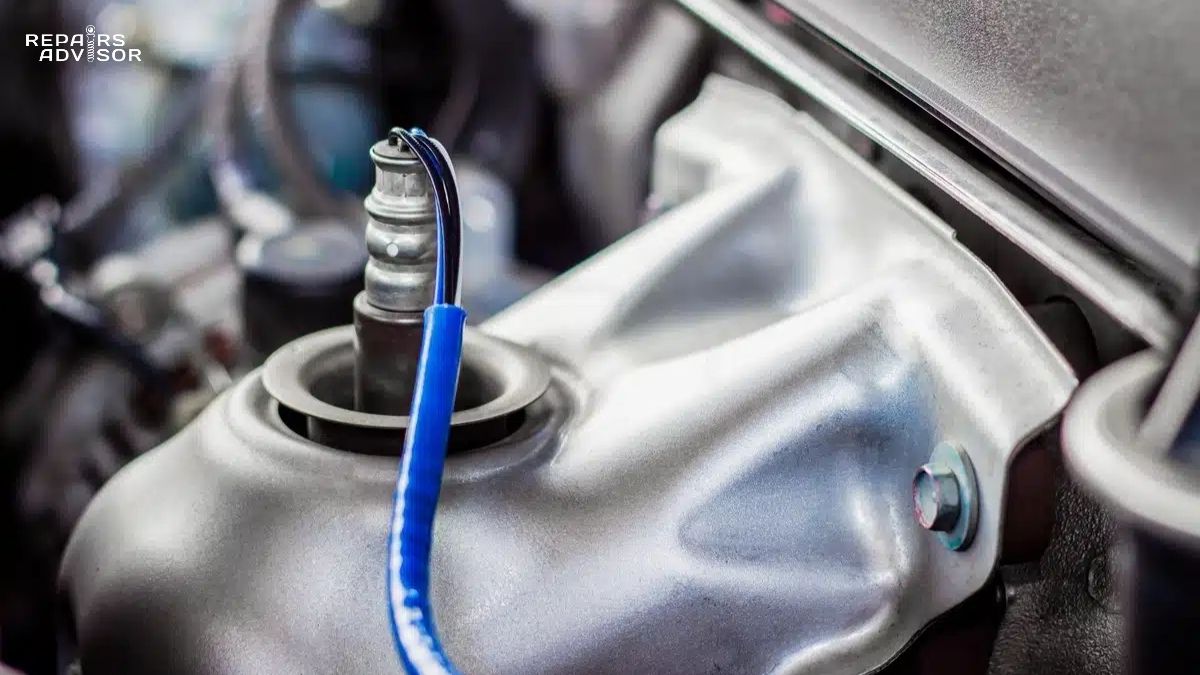
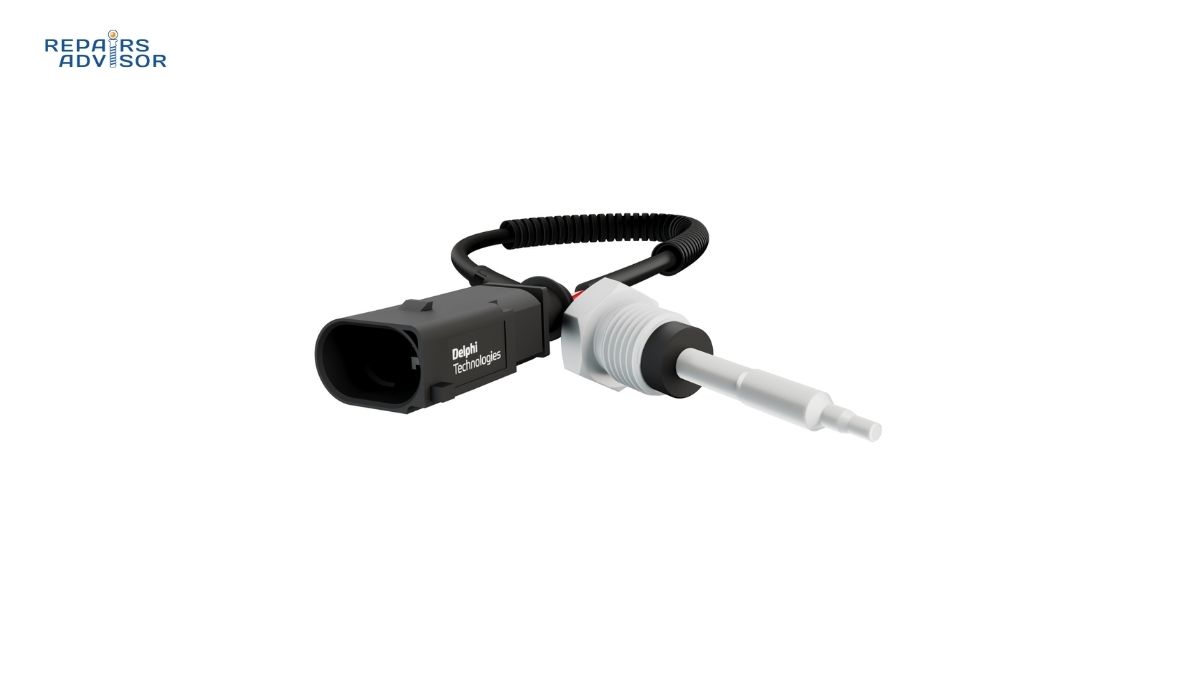
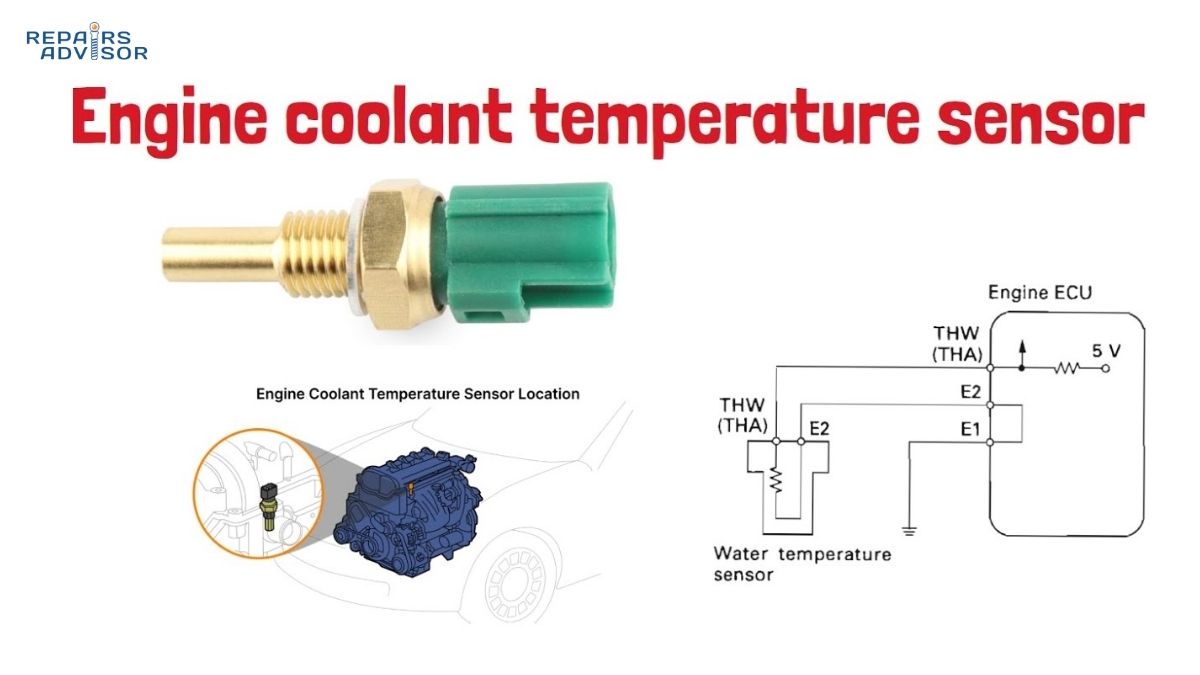
The coolant temperature sensor is a small, threaded electronic component — usually about the size of your thumb — that screws directly into the engine block or cylinder head so its probe tip sits immersed in the coolant flow. Most are two-wire devices: one wire carries a 5V reference voltage from the ECM, and the second carries the return signal back. The housing is typically brass or hard plastic, with a rubber-sealed electrical connector that keeps moisture out of the terminals.
It’s worth clearing up a common source of confusion right away: the coolant temperature sensor and the thermostat are two completely different components. The thermostat is a mechanical valve — it physically opens and closes to control whether coolant flows to the radiator. The CTS doesn’t control anything; it only measures temperature and reports it electronically. They live close together (usually near the thermostat housing), which is part of why people mix them up.
Some vehicles run two coolant temperature sensors: one dedicated to the engine management system (the ECM sensor) and a separate sender unit that feeds the dashboard temperature gauge. Others use a single sensor for both functions. A small number of modern vehicles use a cylinder head temperature (CHT) sensor instead of, or in addition to, a traditional CTS — the CHT measures the metal temperature of the cylinder head rather than the coolant itself, which gives accurate readings even if coolant level drops dangerously low.
Understanding the full engine cooling system puts the CTS in context: it’s one of several monitoring inputs the ECM relies on, alongside the oxygen sensors, the mass air flow sensor, and others — all feeding real-time data so the ECM can continuously optimise engine operation.
How the Coolant Temperature Sensor Works
The NTC Thermistor Principle
Inside the sensor body is a thermistor — a resistor whose electrical resistance changes predictably with temperature. Coolant temperature sensors use a Negative Temperature Coefficient (NTC) thermistor, meaning resistance decreases as temperature increases. This is the opposite of how most electrical components behave, and it’s what makes the sensor simple, reliable, and inexpensive to manufacture.
At very cold temperatures — say, -10°C (14°F) — the thermistor’s resistance is very high, typically around 10,000 ohms (10 kΩ). As the engine warms to normal operating temperature, around 80°C (176°F), resistance drops dramatically to approximately 270–380 ohms. At 120°C the resistance is lower still. This predictable resistance-temperature curve is what the ECM uses to determine actual coolant temperature.
The 5-Volt Reference Circuit
The ECM supplies a regulated 5-volt reference voltage to one terminal of the CTS. Because the sensor’s resistance varies with temperature, the voltage that returns on the second wire — the signal wire — changes proportionally. Cold coolant means high resistance, which “uses up” more of the 5V, leaving a high return voltage of around 3.0–3.5V. As the engine warms and resistance falls, more voltage passes back unchanged, and the signal wire voltage drops toward 1.0–1.3V at full operating temperature.
The ECM monitors this return voltage constantly and cross-references it against a stored lookup table to convert voltage into temperature. It’s an elegantly simple system — two wires, a calibrated resistor, and a lookup table are all that’s needed to give the ECM accurate temperature data. The sensor body itself grounds through its threaded connection to the engine block, completing the circuit.
What the ECM Does with Temperature Data
Temperature information from the CTS drives several interconnected engine management decisions simultaneously:
Fuel injection enrichment: Cold engines need a richer air-fuel mixture to run smoothly — the same function that carburettors once handled with a manual choke. The ECM enriches the fuel mixture at cold temperatures and progressively leans it out as the engine warms. If the CTS reports the engine is still cold when it isn’t, the ECM keeps over-fuelling — burning extra fuel and reducing fuel economy without any real benefit.
Ignition timing: Optimum spark timing changes with engine temperature. The ECM advances or retards ignition timing partly based on CTS data, balancing power output, emissions, and engine protection.
Closed-loop fuel control entry: The ECM can only enter closed-loop operation — where it adjusts fuelling based on live oxygen sensor feedback — once it confirms the engine is sufficiently warm. Until the CTS signals a warm engine, the ECM runs open-loop on pre-programmed fuel maps. A CTS stuck reporting a cold engine means the system may never properly enter closed-loop, causing rich running and elevated emissions.
Cooling fan activation: On vehicles with electrically-operated cooling fans, the ECM triggers fan operation when the CTS reports coolant temperature reaching a threshold — typically around 90–105°C depending on the vehicle. The radiator fans won’t come on at the right time if the sensor is giving false readings.
Cold-start idle speed: The ECM raises idle speed on a cold engine to improve warm-up and driveability. This is controlled partly by CTS data.
EGR system: Exhaust gas recirculation is typically disabled when the engine is cold — the ECM uses CTS data to determine when EGR operation is appropriate.
Where Is the Coolant Temperature Sensor Located?
On the majority of vehicles, the coolant temperature sensor lives near the thermostat housing — the point where the upper radiator hose connects to the engine. To find it: follow the upper radiator hose from the radiator toward the engine, and the housing at the hose’s end is the thermostat housing. The CTS will usually be threaded into this housing or into the cylinder head immediately adjacent to it.
The exact location varies meaningfully between makes and models. Some manufacturers mount it in the engine block itself. Others position it on a coolant passage in the intake manifold, or at the outlet of the cylinder head. European vehicles sometimes locate it in less obvious positions. Always confirm the exact location in your vehicle’s repair manual before starting any diagnostic work — this is especially important on vehicles with two sensors, where the ECM sensor and the gauge sender are in different locations.
As part of the broader engine cooling circuit, the CTS is positioned to read coolant that has already passed through the engine and absorbed heat — giving the ECM the most accurate indication of actual engine temperature. The radiator cap maintains system pressure and sits on the opposite end of the cooling circuit, at the radiator or overflow reservoir.
Symptoms of a Bad Coolant Temperature Sensor
A failing CTS doesn’t always fail completely and obviously — it often degrades gradually, producing symptoms that mimic other problems. The key diagnostic clue is that multiple unrelated-seeming symptoms appear together. Here are the most common signs to watch for:
Check Engine Light (Most Common First Sign)
When the ECM detects that the CTS signal falls outside expected parameters — voltage too high, too low, or erratic — it stores a Diagnostic Trouble Code and illuminates the check engine light. The most common coolant temperature codes are P0115 (circuit malfunction), P0116 (range/performance problem), P0117 (low voltage — usually a short to ground), P0118 (high voltage — usually an open circuit), and P0128 (coolant temperature below thermostat regulating temperature). Reading these codes with an OBD-II scanner is always the first diagnostic step — don’t guess at the fault before you’ve confirmed which code is stored.
Poor Fuel Economy
This is one of the most financially impactful and most commonly misdiagnosed symptoms. If the CTS reports a permanently cold engine, the ECM maintains cold-start fuel enrichment indefinitely — potentially dropping fuel economy by 30–40% compared to normal. Drivers typically blame degraded fuel, injector fouling, or cold weather before suspecting a sensor that costs $20–$50 to replace. If your fuel economy has dropped noticeably and you can’t find an obvious cause, the CTS deserves a close look.
Rough Idle and Rich Running
Excessive fuel enrichment from a falsely “cold” CTS signal leads to an over-rich air-fuel mixture. The engine may idle roughly, respond sluggishly at low speeds, or produce a strong fuel smell. In severe cases, the unburnt fuel passes into the exhaust, where it produces black smoke from the tailpipe — a symptom often mistaken for injector failure or a blown head gasket.
Erratic Temperature Gauge
A failing sensor may cause the dashboard temperature gauge to swing unpredictably, sit permanently at cold, or — more alarming — read at or near the red zone when the engine is actually at normal temperature. The important distinction: if your gauge reads hot but the engine isn’t actually overheating (no steam, no boiling sounds, no smell of burning coolant), a faulty CTS sending a false hot signal is a likely culprit, not a genuine cooling system failure. Conversely, a permanently cold gauge reading often points to either a stuck-open thermostat or a CTS stuck reporting cold.
Cooling Fan Running Constantly — or Not at All
Because the ECM uses the CTS signal to trigger cooling fan operation, a faulty sensor can cause the fan to run at all times (false hot signal) or never activate (false cold signal). A fan that never activates when the engine is genuinely hot creates a real overheating risk, particularly in slow traffic or when idling. A fan running constantly is annoying and may drain the battery, but isn’t immediately dangerous.
Hard Cold Starts
If the CTS tells the ECM the engine is already warm when you first turn the key on a cold morning, the ECM won’t add the extra fuel the cold engine needs to fire reliably. The result is extended cranking, stumbling, or a failure to start — particularly in cold weather. Many “why won’t my car start in winter?” problems trace back to a CTS that’s lost its ability to read low temperatures accurately.
Genuine Overheating Risk
A sensor stuck reporting cold temperatures will prevent the ECM from activating cooling fans and may interfere with other temperature-protection strategies. Combined with a cooling system that has any other marginal condition — slightly low coolant, a marginal thermostat — a bad CTS can push an otherwise manageable situation into genuine overheating. If your temperature gauge enters the red zone or you see steam from under the bonnet, stop driving immediately. Driving through genuine overheating risks head gasket failure or worse — a repair that can easily cost ten times what a CTS replacement would have. If the check engine light is on alongside temperature gauge irregularities, use an OBD-II scanner to read the stored code before resetting the check engine light — clearing codes without diagnosing the fault means the root cause stays hidden.
How to Test a Coolant Temperature Sensor
Testing a CTS is a reasonable job for an intermediate DIYer with a digital multimeter and access to your vehicle’s repair manual (for the specific resistance values at given temperatures). An OBD-II scanner with live data capability makes diagnosis faster and more conclusive. Always check the wiring and connector before condemning the sensor itself — a corroded or loose connector produces the same fault codes as a failed sensor and costs nothing to fix.
Method 1: Multimeter Resistance Test
Allow the engine to cool completely before starting. Locate the CTS (near the thermostat housing), then carefully unplug the electrical connector. Set your multimeter to the resistance (ohms) setting and place the probes across the two terminals on the sensor itself (not the wiring harness side).
At room temperature (approximately 20°C / 68°F), a healthy CTS should read roughly 2,000–3,000 ohms. If you want to verify the full range, remove the sensor and perform a bench test: place the sensor tip in cold water (measure resistance), then hot water around 80°C / 176°F (measure resistance again — should drop to approximately 270–380 ohms). A sensor that shows no change in resistance across temperature ranges has failed. A sensor that reads open circuit (infinite resistance) or short circuit (zero resistance) has also failed.
Compare your readings against the specifications in your vehicle’s repair manual — resistance curves vary by manufacturer and sensor design.
Method 2: Live OBD-II Scan Data
Connect an OBD-II scanner and navigate to live data (sometimes called “data stream” or “PID monitoring”). Select coolant temperature or ECT sensor data. With the engine fully cold (sat overnight), the reading should closely match ambient air temperature — typically within 5°C. After a 10-minute drive at normal operating conditions, it should read 85–105°C depending on your vehicle’s normal operating range.
A sensor reporting -40°C (-40°F) on a warm engine, or 130°C+ when the engine isn’t actually overheating, indicates a circuit fault. Similarly, a sensor that reads a plausible but suspiciously static temperature — say, it reads exactly 20°C regardless of engine state — suggests a wiring or connector fault rather than a properly functioning sensor.
This method parallels how a mechanic would also use live data to verify proper operation of the oil pressure sensor and other engine management inputs — checking that the reported value matches the expected real-world condition.
Check Wiring and Connector First
Before ordering a replacement sensor, inspect the electrical connector and wiring harness. Corrosion inside the connector pins is a very common cause of CTS fault codes — the sensor itself is fine, but corroded contacts are introducing resistance or intermittent contact into the circuit. Spray the contacts with electrical contact cleaner, reconnect, and clear the code to see if it returns. Also look for chafed, cracked, or rodent-damaged wiring along the harness between the sensor and the ECM.
Safety note: wait for the engine to cool completely before disconnecting any cooling system components. Coolant in a warm system is pressurised — loosening connections on a hot engine risks burns from escaping coolant and steam.
Coolant Temperature Sensor Replacement: What to Expect
Is This a DIY-Friendly Job?
For most vehicles, replacing a coolant temperature sensor is a manageable job for an intermediate DIYer. The sensor is typically accessible without removing major components, the tools required are minimal (socket set, and sometimes a specialised sensor socket), and replacement time is usually 30–60 minutes. The job involves some coolant spillage — have a drain pan and fresh coolant ready.
The main risk is a sensor that has corroded into the threads over years of heat cycling. Forcing a stuck sensor risks breaking it off in the engine block or cylinder head — a situation that’s considerably more expensive and time-consuming to resolve than the original sensor replacement. If the sensor shows significant corrosion or won’t break free with reasonable torque, it’s worth having a professional handle it rather than risking a broken thread situation. The same applies if the sensor is located in a difficult position, buried beneath intake components or other ancillaries.
Parts and Cost
The sensor itself is typically inexpensive: $15–$60 for aftermarket options, more for OEM parts. OEM or OEM-equivalent sensors are generally recommended — cheap aftermarket sensors occasionally read inaccurately or fail prematurely, returning you to square one. Professional repair total costs — parts plus labour — typically range from $100 to $300, depending on vehicle make, sensor location, and regional labour rates. Vehicles where the sensor is buried under intake manifold components at the higher end of that range.
Key Steps Overview
The general process: allow the engine to cool completely, partially drain coolant if needed to reduce spillage, remove the connector and unscrew the old sensor, install the new sensor with correct torque (most spec around 15–20 Nm, but check your service manual), reconnect the harness, top up coolant, bleed any air from the system if required, clear any stored codes with an OBD-II scanner, and test drive to confirm the temperature gauge reads correctly and no codes return.
When a Mechanic Is the Right Call
Certain situations call for professional involvement. If the codes return immediately after a new sensor is installed, the fault lies elsewhere — most likely wiring, connector corrosion, or in rarer cases, a PCM fault. Persistent codes after correct sensor replacement need proper electrical diagnosis with a wiring diagram and multimeter, which is generally beyond casual DIY territory.
More critically: if the engine overheated before you identified the CTS fault, a mechanic should evaluate for head gasket damage before assuming the problem is solved. A blown head gasket introduces exhaust gases and air into the cooling system, which can actually cause a functioning CTS to read incorrectly — meaning a new sensor won’t fix the symptoms if the underlying cause is a compromised head gasket. Look for white exhaust smoke, coolant loss without visible leaks, or a sweet-smelling exhaust as potential indicators of head gasket involvement.
Coolant Temperature Sensor vs. Thermostat: Understanding the Difference
This is the most common point of confusion in cooling system diagnosis, and it’s worth spelling out clearly. The thermostat is a mechanical temperature-activated valve. A wax element inside expands when heated, physically opening a valve that allows coolant to flow to the radiator. It opens at a fixed temperature — typically 88–95°C depending on the vehicle — and closes again as coolant cools. No electronic input required. The thermostat does its job through pure physics, independent of the ECM.
The coolant temperature sensor, by contrast, does nothing mechanical at all. It’s purely a measurement and reporting device — it converts coolant temperature into a voltage signal and sends that information to the ECM. The ECM then uses that information to make decisions (adjust fuel, activate fans, etc.), but the CTS itself doesn’t directly control anything in the cooling circuit.
They can fail independently and produce overlapping symptoms, which is where confusion arises. A stuck-open thermostat causes the engine to run permanently cool — the coolant never gets hot enough to read “warm” on the gauge, the heater blows cold air, and the ECM may store code P0128 (coolant temperature below thermostat regulating temperature). A failing CTS, by contrast, sends inaccurate voltage signals regardless of what the thermostat is doing — the codes will be P0115–P0118 circuit/range faults, and live scan data will show implausible temperature readings.
An OBD-II scanner with live data is the definitive tool for separating the two: compare the reported coolant temperature against the actual engine state and cross-reference with gauge behaviour to determine which component is causing the problem.
Other Engine Sensors That Work Alongside the CTS
The coolant temperature sensor doesn’t work in isolation. It’s one input among several the ECM uses to build a complete picture of engine conditions. The MAP sensor reports intake manifold pressure, the mass air flow sensor measures incoming air volume, and the crankshaft position sensor tracks engine speed and position. Each sensor gives the ECM a different dimension of engine state; the CTS provides the thermal dimension.
When the CTS fails, the ECM doesn’t simply stop making decisions — it typically defaults to a fixed “cold” temperature assumption and runs on pre-programmed fuel maps. The engine keeps running, but efficiency, emissions, and performance all suffer. This is by design: the ECM’s failsafe mode keeps the vehicle driveable while the fault persists, which is why a failing CTS often goes undetected until fuel economy noticeably drops or the check engine light appears.
Conclusion
The coolant temperature sensor is a small component with an outsized influence on how your engine runs. By continuously monitoring coolant temperature and reporting it to the ECM, it enables precise fuel injection, timing, fan control, and cold-start management — functions that directly affect fuel economy, emissions, driveability, and engine longevity. When it fails, the symptoms are often subtle at first: slightly worse fuel economy, a slightly rough idle, a check engine light that doesn’t feel urgent. But left unaddressed, a faulty CTS can contribute to genuine overheating, catalytic converter damage from running rich, or failure to diagnose an underlying cooling system problem in time.
For most intermediate DIYers, the CTS is a reasonable diagnostic and replacement task: the testing procedure is straightforward with a multimeter and OBD scanner, the part is inexpensive, and the replacement is generally accessible. The key is to confirm the fault properly before replacing — check the connector and wiring first, read the codes, and verify with live data — and to call in a professional when corrosion, inaccessible location, or persistent post-replacement codes make the job more complex than it first appeared. Always consult your vehicle’s repair manual for the specific resistance specifications and torque values that apply to your make and model.
Coolant Temperature Sensor FAQ: Your Questions Answered
The coolant temperature sensor (CTS) generates a lot of questions — because when it fails, it mimics so many other problems. Whether you’re chasing a check engine light, trying to understand what the sensor actually does, or deciding whether to DIY the replacement, these are the most common questions about ECT sensors answered directly.
Quick Answer
The coolant temperature sensor (also called an ECT sensor) is an NTC thermistor that measures engine coolant temperature and sends a voltage signal to the ECM. Common failure symptoms include check engine light, poor fuel economy, rough idle, and erratic temperature gauge readings. Testing requires a multimeter or OBD-II scanner; replacement costs $15–$60 for the part and takes 30–60 minutes on most vehicles.
What does a coolant temperature sensor do?
The coolant temperature sensor monitors the temperature of your engine coolant and reports that data to the engine control module (ECM) as a continuous voltage signal. The ECM uses this information to adjust fuel injection (cold engines need a richer mixture), ignition timing, cooling fan activation, and cold-start idle speed. It’s one of the core inputs the ECM relies on to run the engine efficiently at all temperatures — from a cold start on a winter morning through to full operating temperature on a hot day. For a deeper look at how it integrates with the wider system, see our guide on how engine cooling systems work.
What are the symptoms of a bad coolant temperature sensor?
The most common signs of a failing CTS are:
Check engine light — usually codes P0115, P0116, P0117, or P0118, indicating a circuit or range fault in the ECT sensor circuit.
Poor fuel economy — if the sensor reports the engine is perpetually cold, the ECM keeps adding extra fuel that isn’t needed, sometimes cutting MPG by 30% or more.
Rough idle or rich running — excess fuelling from a false cold signal causes the engine to run rich, producing a rough idle, fuel smell, or black exhaust smoke.
Erratic or stuck temperature gauge — the gauge may read permanently cold, swing unpredictably, or sit in the hot zone when the engine isn’t actually overheating.
Cooling fan running constantly or not at all — the ECM uses the CTS signal to trigger fan operation; a bad sensor disrupts this.
Hard cold starts — if the sensor tells the ECM the engine is already warm, cold-start fuel enrichment is skipped, making the engine hard to fire on a cold morning.
Read the full OBD codes guide for help interpreting any stored trouble codes alongside these symptoms.
Is the coolant temperature sensor the same as the thermostat?
No — they’re completely different components that are often confused because they sit near each other. The thermostat is a mechanical valve that physically controls whether coolant flows to the radiator; it opens and closes based on coolant temperature using a wax element, with no electronic involvement. The CTS is a purely electronic sensor — it measures temperature and sends data to the ECM, but doesn’t control coolant flow at all. A stuck-open thermostat typically triggers code P0128 (temperature below thermostat regulating temperature), while a bad CTS produces P0115–P0118 circuit fault codes.
Can I drive with a bad coolant temperature sensor?
For short distances, usually yes — the ECM typically defaults to a fixed cold-temperature assumption and the engine keeps running, just inefficiently. However, driving with a faulty CTS for extended periods risks genuine engine damage. If the sensor is stuck reporting a cold engine, the ECM won’t activate cooling fans at the right time, which can contribute to overheating. If your temperature gauge is reading high or you see steam from under the bonnet, stop immediately — don’t drive through a genuine overheat event. A sensor replacement that costs $15–$60 is far preferable to a blown head gasket.
How do I test a coolant temperature sensor?
Two methods work well for DIY diagnosis:
Multimeter resistance test: With the engine fully cold, unplug the sensor connector and measure resistance across the two sensor terminals. At room temperature (~20°C/68°F), a healthy sensor reads approximately 2,000–3,000 ohms. If you have access to hot water, place the sensor tip in water around 80°C/176°F — resistance should drop to roughly 270–380 ohms. A sensor that shows no change with temperature, reads open circuit, or reads zero resistance has failed.
OBD-II live data scan: Connect a scanner and check the reported coolant temperature. On a cold engine (sitting overnight), it should match ambient air temperature. After 10 minutes of normal driving, it should read 85–105°C. A reading stuck at -40°C or above 130°C when the engine is at normal temperature points to a circuit or sensor fault.
Always inspect the wiring connector for corrosion before replacing the sensor — a corroded connector produces identical codes to a failed sensor and costs nothing to clean.
How much does it cost to replace a coolant temperature sensor?
The sensor itself is inexpensive: $15–$60 for most aftermarket options, more for OEM parts. OEM or OEM-equivalent quality is recommended — low-cost aftermarket sensors can read inaccurately or fail early. If you have a professional replace it, total cost (parts + labour) typically runs $100–$300 depending on vehicle make and sensor location. Some sensors are buried under intake components, which increases labour time and cost. DIY replacement on an accessible sensor takes 30–60 minutes on most vehicles.
Where is the coolant temperature sensor located?
On most vehicles, the CTS is located near the thermostat housing — the point where the upper radiator hose meets the engine. Follow the upper hose from the radiator toward the engine; the housing at the end is where you’ll find the thermostat, and the CTS is usually threaded into that housing or the cylinder head immediately adjacent to it. Exact location varies by make and model — some are in the engine block, others in the intake manifold or cylinder head. Always confirm the location in your vehicle’s repair manual before starting any work, particularly on vehicles with two sensors (one for the ECM, one for the dashboard gauge).
Can a bad coolant temperature sensor affect fuel economy?
Yes — and it’s one of the most commonly overlooked consequences of a failing sensor. If the CTS reports the engine as perpetually cold, the ECM maintains cold-start fuel enrichment indefinitely, injecting more fuel than the warm engine needs. Drivers often attribute the drop to poor fuel quality, clogged injectors, or seasonal changes rather than a sensor that costs $20–$50 to replace. A faulty CTS left unaddressed can cause a fuel economy drop of 20–40%. If your fuel economy has declined noticeably without an obvious cause, checking the CTS with an OBD-II scanner and live data is a logical early step in the diagnostic process.
Will a bad coolant temperature sensor cause overheating?
It can contribute to overheating, though it’s rarely the sole cause. The most direct risk: if the sensor is stuck reporting cold temperatures, the ECM won’t trigger the electric cooling fans when coolant gets hot. In slow traffic or extended idling on a warm day, missing fan activation can allow coolant temperatures to climb dangerously. A sensor stuck reporting hot temperatures won’t cause overheating, but it will trigger unnecessary fan operation and may cause the ECM to retard timing unnecessarily. If you’re seeing genuine overheating — steam, a rising gauge, boiling smells — check coolant level, thermostat, water pump, and radiator alongside the CTS rather than assuming the sensor is the only culprit.
What OBD codes are related to the coolant temperature sensor?
The main DTC codes associated with the CTS circuit are:
P0115 — Engine Coolant Temperature Circuit Malfunction (general circuit fault)
P0116 — ECT Sensor Circuit Range/Performance (reading outside expected parameters)
P0117 — ECT Sensor Circuit Low Voltage (usually a short to ground)
P0118 — ECT Sensor Circuit High Voltage (usually an open circuit)
P0125 — Insufficient Coolant Temperature for Closed-Loop Fuel Control
P0128 — Coolant Temperature Below Thermostat Regulating Temperature (more often a thermostat fault than a CTS fault)
Before replacing the sensor, clear the code after any wiring/connector inspection and retest — a corroded connector that’s been cleaned may not set the code again.