

Pop the hood of almost any car built in the last three decades and somewhere in there is a small metal box quietly running the show. Drivers hear the term “ECU” all the time, but few could actually explain what it does or why it matters when something goes wrong. This overview breaks down what an ECU is, how it works, the warning signs of a problem, and when a DIY check makes sense versus when it’s time to bring in a professional.
Quick Answer
An ECU (Engine Control Unit, also called ECM) is the onboard computer that reads engine sensor data dozens of times per second and adjusts fuel delivery, ignition timing, and idle speed in real time. Related modules — PCM, TCM, and BCM — handle the transmission and body electronics, all communicating over a shared network. Suspected ECU failure should be confirmed with diagnostic testing before replacement, since symptoms often overlap with sensor or wiring faults, and replacement typically runs $500–$2,500 with programming.
What Is an ECU?
An ECU, short for Engine Control Unit, is the onboard computer responsible for managing how your engine runs. It’s often called the “brain” of the car because it constantly reads incoming data and decides how the engine should respond — similar to how your own brain processes sensory input and sends signals to your muscles without you consciously thinking through each step.
The terms ECU and ECM (Engine Control Module) are generally interchangeable. Japanese and Korean automakers tend to favor “ECU,” while GM and several other domestic brands typically use “ECM.” Check your owner’s manual if you want to know which term your manufacturer prefers — it doesn’t change what the component does, just what it’s called on the parts diagram.
It’s worth understanding upfront that the ECU isn’t the only computer in your vehicle. Modern cars rely on a whole network of interconnected control modules that each handle a specific job. Depending on the vehicle, that can mean anywhere from a handful of modules to well over a hundred, all working together rather than as one single “car computer.”
How an ECU Works: Inputs, Processing, and Outputs
At a basic level, an ECU operates on a simple loop: gather information, process it, then act on it. That loop repeats continuously while the engine runs, and understanding it makes the rest of the topic much easier to follow.
Inputs: Sensor Data Collection
The ECU constantly receives data from sensors positioned throughout the engine. A mass air flow sensor measures how much air is entering the engine, while a throttle position sensor reports how far the accelerator pedal is pressed. A crankshaft position sensor tells the ECU exactly where each cylinder is in its cycle, which is essential for timing fuel delivery and spark correctly. Coolant temperature, intake air temperature, and exhaust oxygen levels round out the core dataset most ECUs rely on for everyday operation.
Processing: Lookup Tables and Real-Time Calculations
Once the ECU has this stream of sensor data, it compares it against pre-programmed fuel and ignition maps stored in its memory. These lookup tables specify what fuel and timing values work best for a given combination of engine speed, load, and temperature — essentially a giant reference chart the ECU consults instantly rather than calculating from scratch each time. This comparison happens dozens of times per second, which is why the engine can respond almost instantly to a stab of the throttle or a sudden change in load.
Outputs: Controlling Engine Components
Based on those calculations, the ECU sends out commands to physical components. It adjusts fuel injector pulse width to control how much fuel gets delivered, fires the ignition system at precisely the right moment, manages idle speed when the engine isn’t under load, and can activate the radiator cooling fan when temperature climbs too high. All of this happens continuously and automatically, without the driver ever noticing the calculations taking place behind the scenes.
Types of Control Modules in Modern Vehicles
The term “ECU” often gets used loosely to describe several different modules, so it helps to know the distinctions. An ECM controls the engine only — fuel, ignition, idle, and emissions. A PCM (Powertrain Control Module) combines the ECM and transmission control functions into a single unit, which is common on many domestic vehicles. A standalone TCM (Transmission Control Module) manages gear shifts, torque converter lockup, and shift timing when it isn’t folded into a PCM. A BCM (Body Control Module) handles non-powertrain electronics like power windows, door locks, and interior lighting.
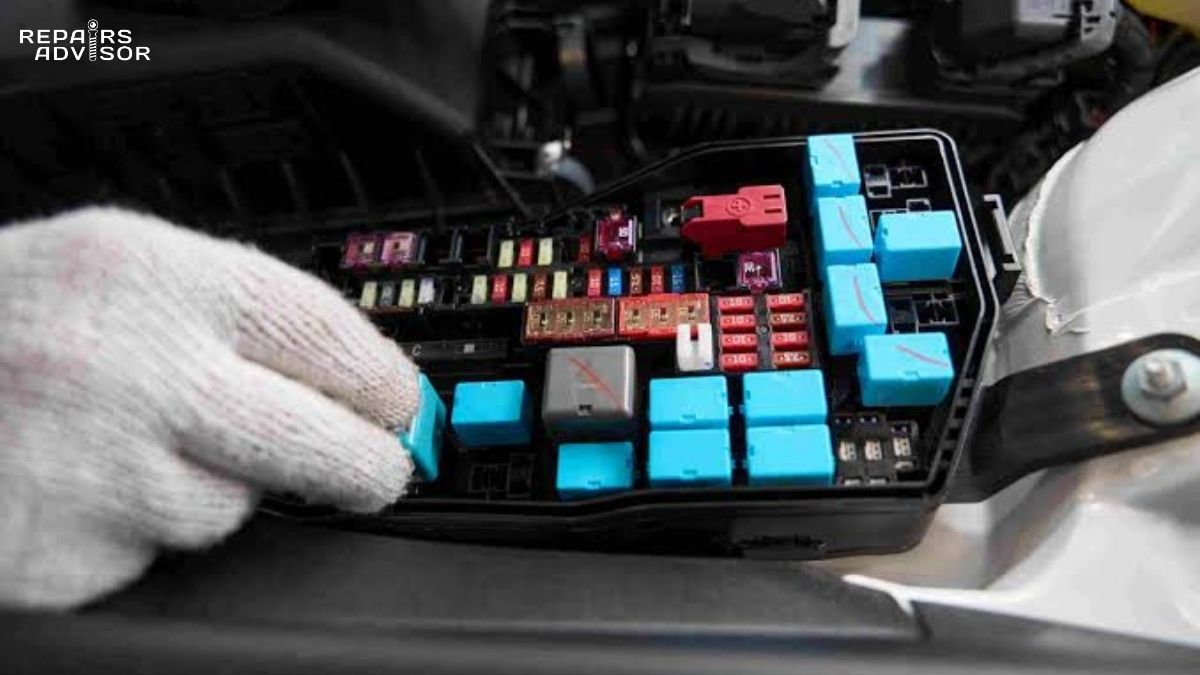
These modules don’t operate in isolation — they constantly share data over a CAN bus network, which acts as the communication backbone linking every module in the vehicle together. That network runs on the vehicle’s fuses and relays for power and protection, so an electrical distribution problem can sometimes produce symptoms that look like a module fault even when the modules themselves are perfectly healthy.
Common Signs of ECU Problems
ECU-related issues tend to show up as a cluster of seemingly unrelated symptoms rather than one obvious sign. Watch for a check engine light that won’t clear even after other repairs are made, noticeably worse fuel economy, rough idling or unexpected stalling, difficulty starting the engine, transmission shifts that feel erratic or delayed, and a vehicle that repeatedly fails an emissions test despite no other apparent cause.
It’s worth emphasizing that these same symptoms can just as easily point to a failing sensor or a damaged section of wiring or a corroded ground connection, rather than the ECU itself. An ECU fault should never be assumed from symptoms alone — it needs to be confirmed through proper diagnostic testing, typically starting with pulling stored diagnostic trouble codes with a scan tool.
What Causes ECU Failure
A handful of root causes account for most real ECU failures. Water or moisture intrusion is one of the most common — a leak from the cabin, engine bay, or a flooded roadway can corrode the internal circuitry over time. Voltage surges from a failing alternator, a weak battery, or an improperly performed jump-start can damage sensitive internal components almost instantly, since the ECU’s circuits are designed for a fairly narrow, stable voltage range. Corroded or loose connectors gradually degrade the signal path between the ECU and the rest of the vehicle, and ordinary component aging — capacitors, solder joints, and circuit boards wearing out after years of heat cycling — eventually takes a toll on any electronic module, ECUs included.
It’s also common for what looks like ECU failure to actually be a wiring or grounding problem instead, which is another reason accurate diagnosis matters before anyone assumes the ECU itself needs replacing.
Safety Precautions Before Inspecting or Handling an ECU
If you’re planning to visually inspect connectors or check basic wiring near the ECU, a few precautions protect both you and the electronics. Always disconnect the battery, negative terminal first, before touching any connectors near the module. Ground yourself with an anti-static strap, or at minimum touch a bare metal surface on the vehicle’s frame, before handling any electronic components — ECUs are sensitive to static discharge and can be damaged by even a brief, invisible spark you wouldn’t otherwise notice. Avoid working in wet or humid conditions near the module, since moisture is one of the leading causes of failure in the first place. And before disconnecting anything, take a few photos or note the connector positions so reassembly goes smoothly afterward.
These precautions cover basic visual inspection only. Actual repair, reprogramming, or replacement of the ECU is a different matter entirely, discussed next.
DIY Diagnosis vs. Professional ECU Service
There’s a meaningful line between what’s reasonable to check yourself and what calls for professional-grade equipment. Pulling stored codes with a basic OBD-II scanner, checking your battery and alternator output, and visually inspecting accessible wiring and connectors for corrosion are all within reach for a comfortable DIYer with basic tools.
Confirming that the ECU itself — rather than a sensor or wiring fault — is actually the source of a problem generally requires professional diagnostic equipment and experience. The same goes for reprogramming a replacement module or coding it to match your specific vehicle, which typically requires dealer-level or specialized aftermarket tools most home garages don’t have. Replacement costs commonly run from several hundred to a couple thousand dollars depending on the make and model, with programming often adding to that total. Given how many other components can produce ECU-like symptoms, it’s worth having a professional confirm the diagnosis before committing to a replacement — misdiagnosis is common enough that skipping this step can mean paying for a new module that doesn’t actually fix the underlying problem.
Conclusion
The ECU plays a central role in how your engine runs, but it’s just one part of a much larger engine management network working together behind the scenes. When you notice performance issues, resist the urge to jump straight to “it’s the ECU” — proper diagnostic testing rules out the more common culprits first and can save you from unnecessary expense. For DIYers who want to go deeper into how individual sensors and modules fit into the bigger picture, the broader vehicle systems library is a good next step.
ECU Basics: Frequently Asked Questions
Here are quick, direct answers to the most common questions drivers ask about their vehicle’s ECU — what it is, how it works, and when a problem calls for professional attention.
Quick Answer
An ECU (Engine Control Unit) is the computer that manages fuel, ignition, and idle in real time using sensor data. Related modules — PCM, TCM, and BCM — handle other vehicle systems, and ECU problems should always be confirmed with diagnostic testing before assuming a costly replacement is needed.
What does ECU stand for, and is it the same as ECM?
ECU stands for Engine Control Unit. ECM (Engine Control Module) refers to the same component — the terms are used interchangeably, though the naming convention varies by manufacturer. Japanese and Korean automakers tend to use “ECU,” while GM and several domestic brands favor “ECM.” Neither term changes what the component actually does; it’s simply a labeling difference you’ll notice on parts diagrams and repair manuals.
How does an ECU actually know what to do?
The ECU reads live data from engine sensors dozens of times per second — things like intake air volume, throttle position, and engine speed — then compares that data against pre-programmed fuel and ignition maps stored in its memory. Based on that comparison, it sends commands to components like the fuel injectors and ignition system. This engine management loop happens continuously and automatically while the engine runs, which is why the engine can respond almost instantly to changes in throttle or load.
What’s the difference between an ECU, PCM, TCM, and BCM?
An ECU/ECM controls the engine only — fuel, ignition, idle, and emissions. A PCM (Powertrain Control Module) combines engine and transmission control into a single unit, common on many domestic vehicles. A TCM (Transmission Control Module) manages gear shifts, torque converter lockup, and shift timing when it isn’t folded into a PCM. A BCM (Body Control Module) handles non-powertrain electronics like power windows, door locks, and interior lighting. All of these modules communicate with each other over a shared CAN bus network, which is why a fault in one module can sometimes produce symptoms that appear to come from another.
What are the most common signs of ECU problems?
Watch for a check engine light that won’t clear, noticeably worse fuel economy, rough idling or unexpected stalling, difficulty starting the engine, transmission shifts that feel erratic or delayed, or repeated emissions test failures. These symptoms often overlap with a failing sensor or damaged wiring or a corroded ground connection, so they shouldn’t be treated as automatic proof of ECU failure. A cluster of unrelated symptoms appearing together is a stronger signal worth investigating than any single symptom on its own.
What usually causes an ECU to fail?
The most common causes are water or moisture intrusion, voltage surges from a failing alternator or a weak battery, corroded or loose connectors, and ordinary component aging as capacitors and solder joints wear out over years of heat cycling. A bad ground or wiring fault can also produce symptoms that look identical to ECU failure without the module itself being at fault, which is one more reason proper diagnosis matters before replacing anything.
Is it safe to disconnect the battery when working near the ECU?
Yes, and it’s actually a recommended precaution before touching connectors near the module. Disconnect the negative terminal first, and ground yourself with an anti-static strap or a bare metal surface on the vehicle’s frame beforehand — ECUs are sensitive to static discharge and can be damaged by even a brief, invisible spark. Avoid working in wet or humid conditions near the module, since moisture is one of the leading causes of ECU failure in the first place, and take a photo of connector positions before disconnecting anything.
Can I diagnose an ECU problem myself?
To a point. Pulling stored diagnostic trouble codes with a basic OBD-II scanner, checking battery and alternator output, and inspecting accessible wiring for corrosion are all reasonable DIY steps. Confirming that the ECU itself — rather than a sensor or wiring issue — is the actual cause generally requires professional-grade diagnostic equipment and experience that goes beyond a basic code reader.
Do I need a dealer to program a new ECU?
Often, yes, or at least a shop with comparable equipment. A replacement ECU typically needs to be coded to match your specific vehicle’s VIN, engine, and transmission setup before it will function correctly. Some aftermarket tools can handle this on certain makes and models, but dealer-level or specialized programming equipment is common enough that most DIYers end up outsourcing this step even if they source and install the physical module themselves.
How much does ECU replacement cost?
Replacement typically runs from several hundred to a couple thousand dollars depending on make and model, with programming or coding to match the vehicle often adding to that total. Because so many other components can mimic ECU failure, it’s worth having a professional confirm the diagnosis first — misdiagnosis is common enough that a replacement doesn’t always solve the underlying problem, leaving you with the same symptoms and a new expense.
Where can I learn more about how individual sensors and modules work?
The broader vehicle systems library covers individual sensors and modules — including mass air flow sensors, throttle position sensors, and crankshaft position sensors — in more depth, along with how each one feeds data into the ECU’s decision-making loop.