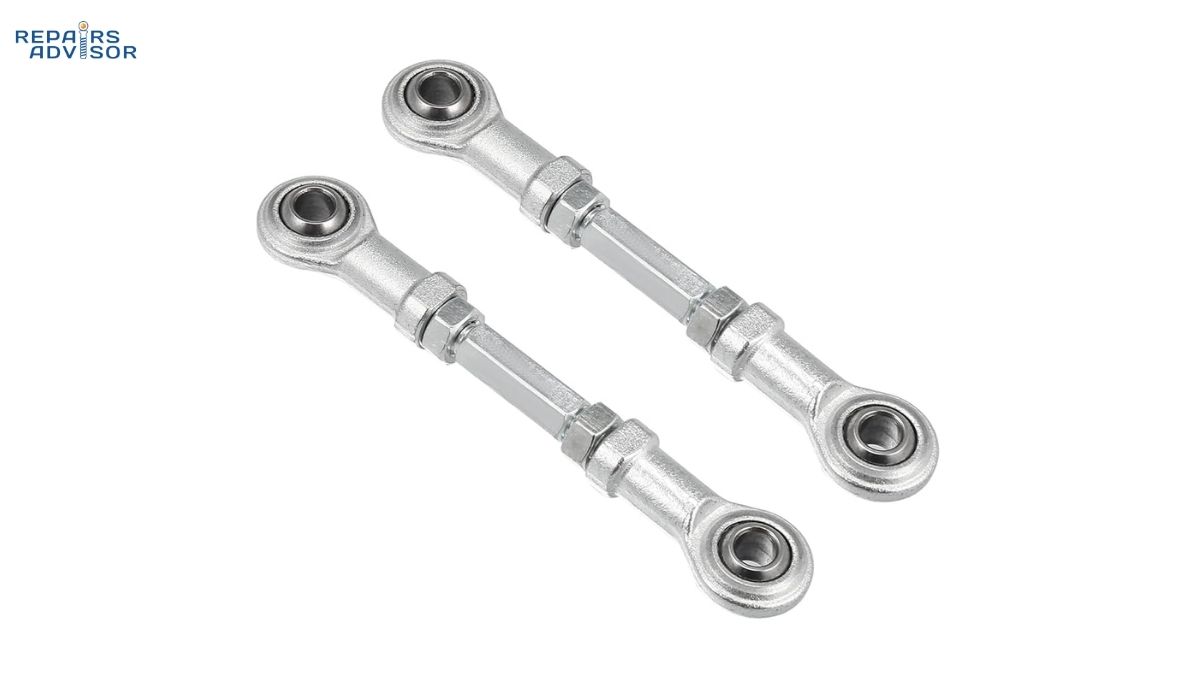
Turning the steering wheel feels like a single, simple action, but a lot has to happen mechanically between your hands and the tires touching the road. Three components carry that chain of motion: the steering column, which delivers your input; the tie rods, which transmit steering force to each wheel; and the ball joints, which let the suspension and steering articulate together without binding. All three wear over time, and because they’re all tied to directional control, none of them are components worth ignoring once symptoms show up.
Quick Answer
Tie rods, ball joints, and the steering column are the three linkage components connecting the steering wheel to the wheels — tie rods transmit steering force and set toe angle, ball joints let the suspension and steering articulate as the wheel turns and moves vertically, and the column delivers driver input (while collapsing safely on impact). Worn linkage shows up as clunking, wandering, or uneven tire wear, and a combined tie rod and ball joint repair with the required alignment commonly runs $400–$750.
What Connects the Steering Wheel to the Wheels?
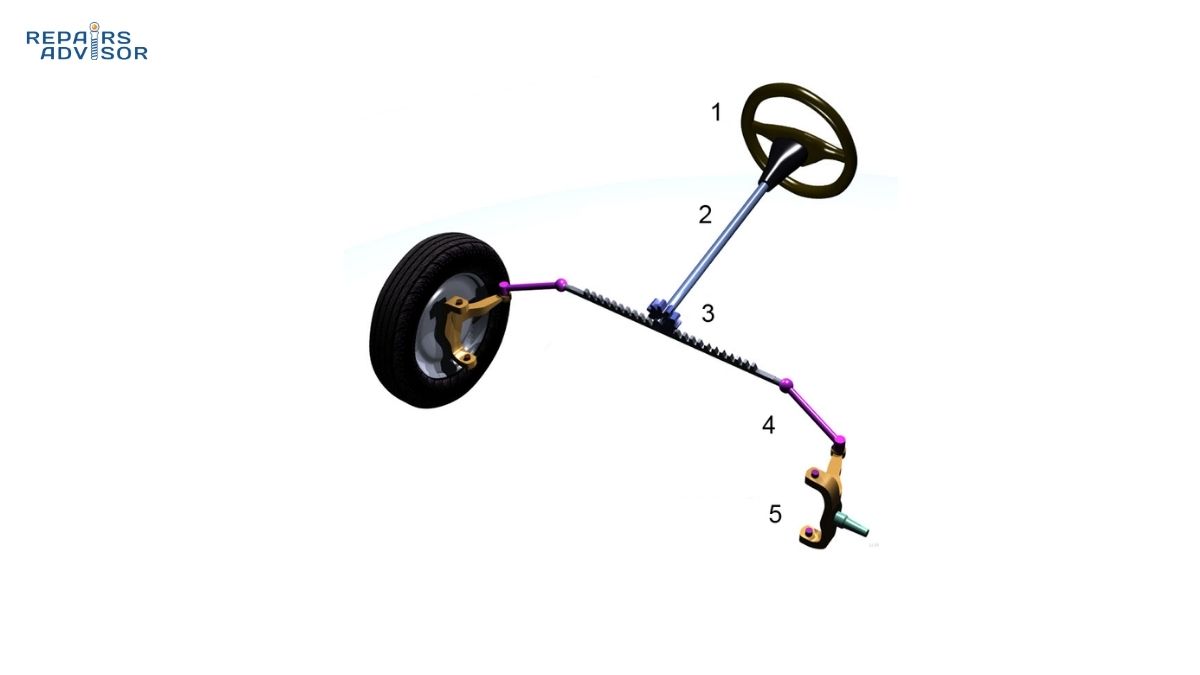
The steering linkage is a chain, not a single part. Rotational input starts at the steering wheel, travels down the column, and reaches the rack-and-pinion mechanism, which converts it into linear rack motion. That motion then passes through the tie rods to the steering knuckle, while ball joints — mounted between the control arms and the knuckle — allow the whole assembly to pivot for steering and travel vertically with the suspension at the same time. Each of these three components does a distinct job, and each wears differently, which is why they’re worth understanding individually rather than as one vague “steering stuff.”
Tie Rods — Transmitting Steering Force
Inner Tie Rod — Connection to the Rack
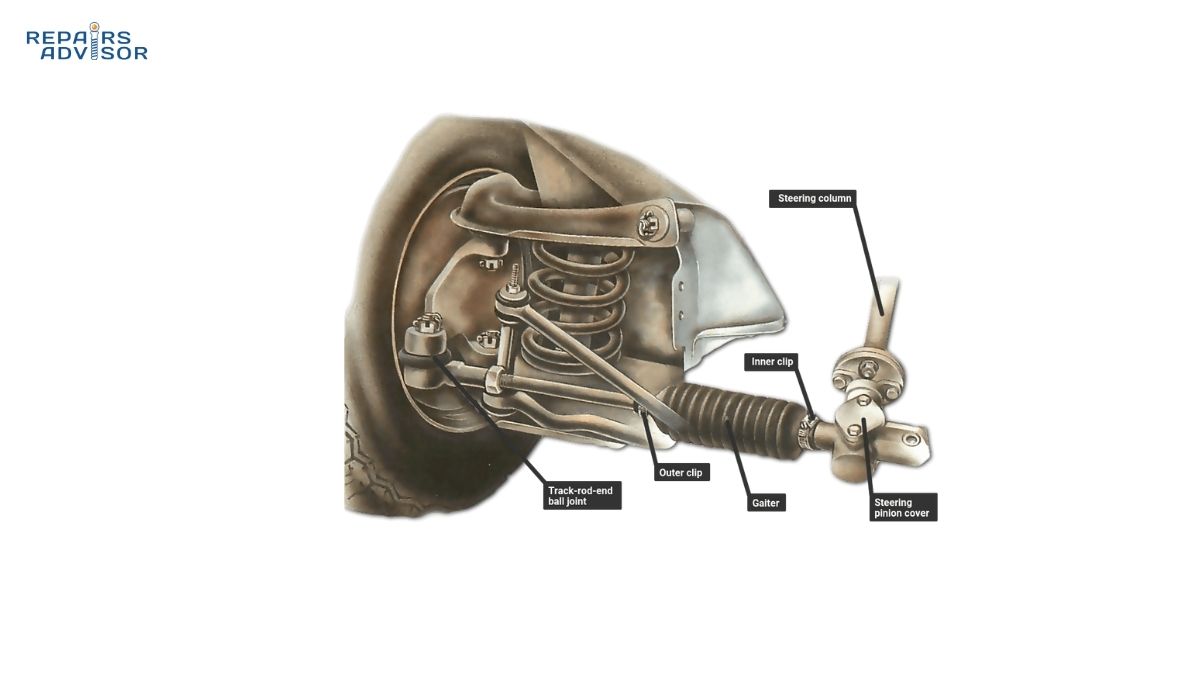
The inner tie rod connects directly to the end of the steering rack, hidden under the rack boot, and handles the majority of steering force. It has to be strong enough to withstand constant lateral loading while still allowing smooth articulation as the rack moves side to side with every steering input.
Outer Tie Rod — Ball-and-Socket Connection to the Knuckle
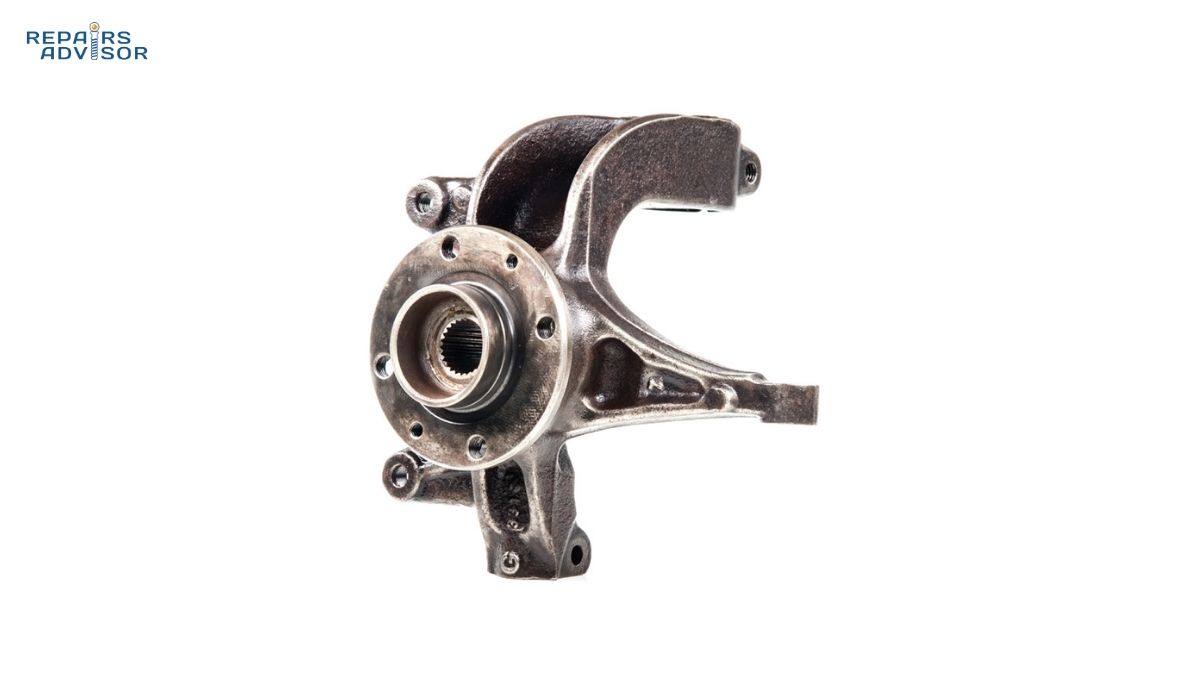
The outer tie rod picks up where the inner rod leaves off, connecting to the steering knuckle through its own ball-and-socket joint. That socket lets the outer rod pivot and flex, which is necessary because the knuckle is constantly changing position — turning left and right while also moving up and down with the suspension over bumps.
The Threaded Adjustment That Sets Toe Alignment
Where the inner and outer tie rod meet, there’s a threaded connection — an adjustment sleeve — that sets how far each wheel points inward or outward relative to the vehicle’s centerline, known as toe angle. This threaded joint is exactly what a shop adjusts during an alignment, and it’s also why replacing a tie rod always changes toe angle and requires re-alignment afterward. This directly affects the rack-and-pinion geometry covered elsewhere in this library — toe is one piece of the larger geometric picture that also includes steering ratio and Ackermann angle — and ties into the broader steering geometry and alignment fundamentals that govern handling and tire wear.
Ball Joints — Allowing Suspension and Steering to Articulate
Load-Bearing (Lower) vs. Non-Load-Bearing (Upper) Ball Joints
Not all ball joints do the same job. On most short-long-arm suspension designs, the lower ball joint is load-bearing — it carries the actual weight of the vehicle and its occupants, which means it experiences more stress and typically wears faster. The upper ball joint is usually non-load-bearing, sometimes called a “follower” — its job isn’t to carry weight but to maintain precise camber, caster, and toe geometry. Because of that precision requirement, non-load-bearing joints are preloaded from the factory specifically to compensate for wear before it starts affecting alignment.
How Ball Joints Connect to the Control Arm and Steering Knuckle
Ball joints form the physical connection between the control arms and the steering knuckle, and that connection has to allow rotation in multiple directions at once — the knuckle turns left and right for steering while also moving up and down for suspension travel, and the ball-and-socket design is what makes both motions possible through the same joint. For a deeper look at ball joint construction and wear specifically, see how ball joints work. Nearby, control arm bushings handle a related but separate job — isolating vibration at the control arm’s inner pivot rather than bearing load at the outer end.
Steering Columns — Driver Input and Crash Safety
How the Column Delivers Input to the Rack
The steering column is the mechanical link between the steering wheel and the rack-and-pinion assembly, carrying rotational input down through a shaft to the pinion gear. On power-assisted vehicles, that input also gets read by the assist system — whether hydraulic power steering or electronic power steering — which adds torque to reduce driver effort without changing what the column itself is doing mechanically.
Collapsible Design — A Crash-Safety Feature Since 1967
Modern steering columns aren’t rigid by accident — they’re engineered to collapse. General Motors introduced the first collapsible column in 1967, using a two-piece design with steel mesh that crumpled under load. Before that innovation, rigid columns were a major source of severe injury in frontal collisions, since crash force transmitted straight through the column into the driver. Today’s columns use telescoping inner and outer sleeves, shear pins, and energy-absorbing materials that let the column progressively compress during a frontal impact, absorbing crash energy over a longer period instead of delivering it to the driver all at once. This is a deliberate safety feature, not a defect — a column that collapses as designed during a crash is doing exactly what it’s supposed to.
Signs of Worn Tie Rods, Ball Joints, or Steering Linkage
Tie Rod Symptoms
Worn tie rods produce a knocking or clunking sound most pronounced during steering input — specifically while turning, especially at low speed. Loose tie rods also translate into more side-to-side play at the wheel, which can feel like wandering or a need for constant small steering corrections to hold a lane.
Ball Joint Symptoms
Worn ball joints tend to clunk over bumps and dips even with no steering input at all, since the joint is reacting to vertical suspension travel rather than steering force. Vibration in the front suspension, uneven tire wear on the inner or outer tread edge, and pulling to one side under braking are additional signs.
The 9-and-3 vs. 12-and-6 Diagnostic Check
A quick way to tell the two apart: grasp the tire at the 9 and 3 o’clock positions and push-pull laterally — play here points to tie rod wear. Grasp at 12 and 6 o’clock and push-pull vertically — play here points to ball joint or wheel bearing wear.
| Symptom | Tie Rod | Ball Joint |
|---|---|---|
| Noise timing | Most pronounced during steering input/turns | Most pronounced over bumps, no steering input needed |
| Wheel play direction | Lateral (9-and-3 o’clock check) | Vertical (12-and-6 o’clock check) |
| Associated tire wear | Toe-related, can cause tire scrubbing | Camber-related, inner/outer edge wear |
Safety note: Worn ball joints that progress far enough can let the stud separate from the housing entirely, causing sudden loss of steering control. This isn’t a wear item to defer once symptoms appear — a clunk over bumps that’s getting louder or more frequent warrants prompt inspection.
What Causes Tie Rod and Ball Joint Wear
Road shock from potholes and rough surfaces is the primary driver of wear on both components, compounded by damaged boots or seals that let dirt and moisture into the joint. High mileage naturally accelerates wear on any articulating joint, and on ball joints with grease fittings, skipping scheduled lubrication service shortens their working life considerably.
Repair Costs and Alignment Requirements
Tie Rod and Ball Joint Replacement Cost
Ball joint replacement typically runs $200–$500 per joint, and tie rod ends run $200–$600 per side including parts and labor. A combined front-end job addressing both sides, plus the required alignment, commonly totals $400–$750, with labor running 4–6 hours at $100–$200 per hour depending on the shop and vehicle.
Why Alignment Is Mandatory
Replacing a tie rod directly changes toe angle, since the repair involves disconnecting and reconnecting the threaded adjustment sleeve that sets it. Skipping alignment after the repair leads to rapid, uneven tire wear — many shops bundle alignment into the same visit specifically because the two are inseparable steps of the same job.
Skill-level disclaimer: The diagnostic checks above — the 9-and-3 and 12-and-6 wheel play tests — are approachable for an intermediate DIYer with basic tools. The actual replacement and required alignment are a different matter: they call for a lift and an alignment rack, and given that steering control is directly at stake, this repair is best left to a shop rather than attempted in a driveway.
Maintaining Your Steering Linkage
Periodic front-end inspection catches tie rod and ball joint wear before it turns into a safety concern, and any new clunk, vibration, or wandering sensation is worth investigating promptly rather than waiting for it to worsen. Where boots and seals are accessible, checking their condition during routine service can catch contamination-driven wear early, before it reaches the joint itself. This entire linkage works in coordination with the rest of the suspension system, so a clunk that seems to come from “the front end” broadly is worth diagnosing carefully rather than assuming it’s any one specific part.
For a broader look at how steering and suspension components fit together, the vehicle systems library covers the surrounding systems in more depth. Specific tie rod and ball joint part numbers vary by platform — Ford manuals cover steering linkage specs and torque values for their model lineup.
Tie Rods, Ball Joints & Columns: Frequently Asked Questions
Following the Outline Creation research protocol — reusing the research and 12 verified URLs already extracted for “tie rods ball joints columns” earlier in this session (no repeat web search or URL extraction needed).
What’s the difference between tie rods, ball joints, and the steering column?
They’re three separate links in the same chain connecting the steering wheel to the wheels. The steering column delivers driver input down to the rack-and-pinion mechanism; tie rods transmit that rack motion out to each wheel and set toe angle in the process; and ball joints sit between the control arms and the steering knuckle, letting the suspension and steering articulate together as the wheel turns and travels vertically over bumps.
What does a tie rod do?
The inner tie rod connects to the steering rack and handles most of the steering force, while the outer tie rod connects the inner rod to the steering knuckle through a ball-and-socket joint that pivots as the knuckle moves. The threaded connection between the inner and outer rod is also the adjustment point that sets toe angle — one piece of the broader rack-and-pinion geometry picture — which is why replacing a tie rod always requires a follow-up alignment.
What’s the difference between load-bearing and non-load-bearing ball joints?
On most suspension designs, the lower ball joint is load-bearing — it carries the actual weight of the vehicle and wears faster because of that added stress. The upper ball joint is typically non-load-bearing, sometimes called a “follower,” and its job is maintaining precise camber, caster, and toe geometry rather than carrying weight; it’s preloaded from the factory to compensate for wear before it affects alignment. Both connect the control arms to the steering knuckle — see how ball joints work for a deeper look at construction and wear.
Why does the steering column collapse in a crash — is that a defect?
No — it’s an intentional safety feature. Modern columns use telescoping sleeves, shear pins, and energy-absorbing materials to compress progressively during a frontal impact, spreading crash force over a longer period instead of transmitting it directly into the driver. This design dates back to 1967, when GM introduced the first collapsible column specifically to reduce injury severity in frontal collisions. Whether a column is hydraulically or electronically power-assisted has no bearing on this crash-safety design.
How can I tell if it’s a bad tie rod or a bad ball joint?
The timing of the noise is the clearest tell: tie rod clunks are most pronounced during steering input, especially turning at low speed, while ball joint clunks show up over bumps and dips even with no steering input at all. A hands-on check confirms it — grasp the tire at 9 and 3 o’clock and push-pull laterally for tie rod play, or at 12 and 6 o’clock and push-pull vertically for ball joint play.
Is it safe to keep driving with a worn ball joint?
Not once symptoms are noticeable. A ball joint that wears far enough can let the stud separate from the housing entirely, causing sudden loss of steering control. A clunk over bumps that’s getting louder or more frequent is worth a prompt inspection rather than something to defer.
What causes tie rod and ball joint wear?
Road shock from potholes and rough surfaces is the main driver for both, made worse by damaged boots or seals that let dirt and moisture into the joint. High mileage accelerates wear naturally, and on ball joints with grease fittings, skipping scheduled lubrication shortens their service life considerably — worn control arm bushings nearby can produce similar-feeling looseness and are worth checking at the same time.
How much does tie rod/ball joint replacement cost, and why do I need an alignment afterward?
Ball joints typically run $200–$500 per joint, and tie rod ends run $200–$600 per side; a combined front-end job addressing both sides plus the required alignment commonly totals $400–$750. Alignment is mandatory because tie rod replacement directly changes toe angle — skipping it leads to rapid, uneven tire wear, which is why most shops bundle the two into the same visit.
Can I diagnose steering linkage wear myself?
The 9-and-3 and 12-and-6 wheel play checks are approachable for an intermediate DIYer with basic tools. The actual replacement and required alignment are a different matter — they call for a lift and an alignment rack, and given that steering control is directly at stake, that part of the job is best left to a shop. For a broader look at how this linkage fits into the rest of the suspension system, see the vehicle systems library.